
Titanium vs stainless steel vs cast iron: which pan lasts longest?
By KAJI · November 7, 2026
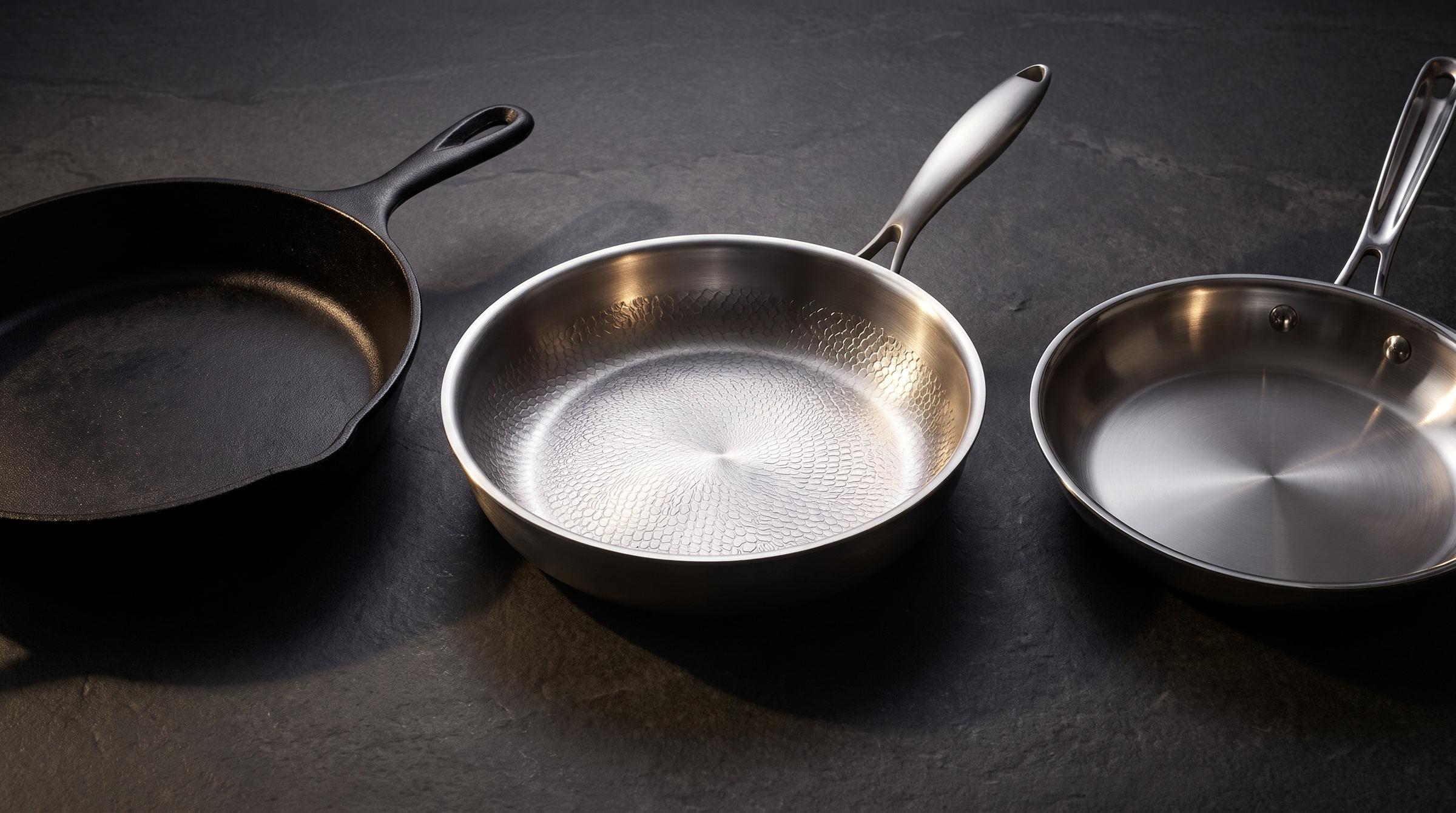
Why these three last
A coated nonstick pan has a limited life because its coating wears out. Cast iron, stainless steel and titanium are different: you cook directly on the metal, so there is nothing to wear away. That is why people tired of replacing pans usually end up choosing between these three. If you are still weighing up nonstick, start with titanium vs nonstick.
Side by side
| Cast iron | Stainless steel | KAJI titanium | |
|---|---|---|---|
| Weight (about 11 in) | Very heavy, often 5 lb or more | Medium, around 2 to 3 lb | Light: about 1.8 lb (KAJI 28 cm) |
| Upkeep | Seasoning to maintain, dry right away | Easy, dishwasher usually fine | Easy, dishwasher-safe, no seasoning |
| Rust | Rusts if left wet | No | No |
| Heats up | Slowly | Fast with an aluminium core | Fast and evenly (aluminium core) |
| Holds heat | Excellent | Good | Good |
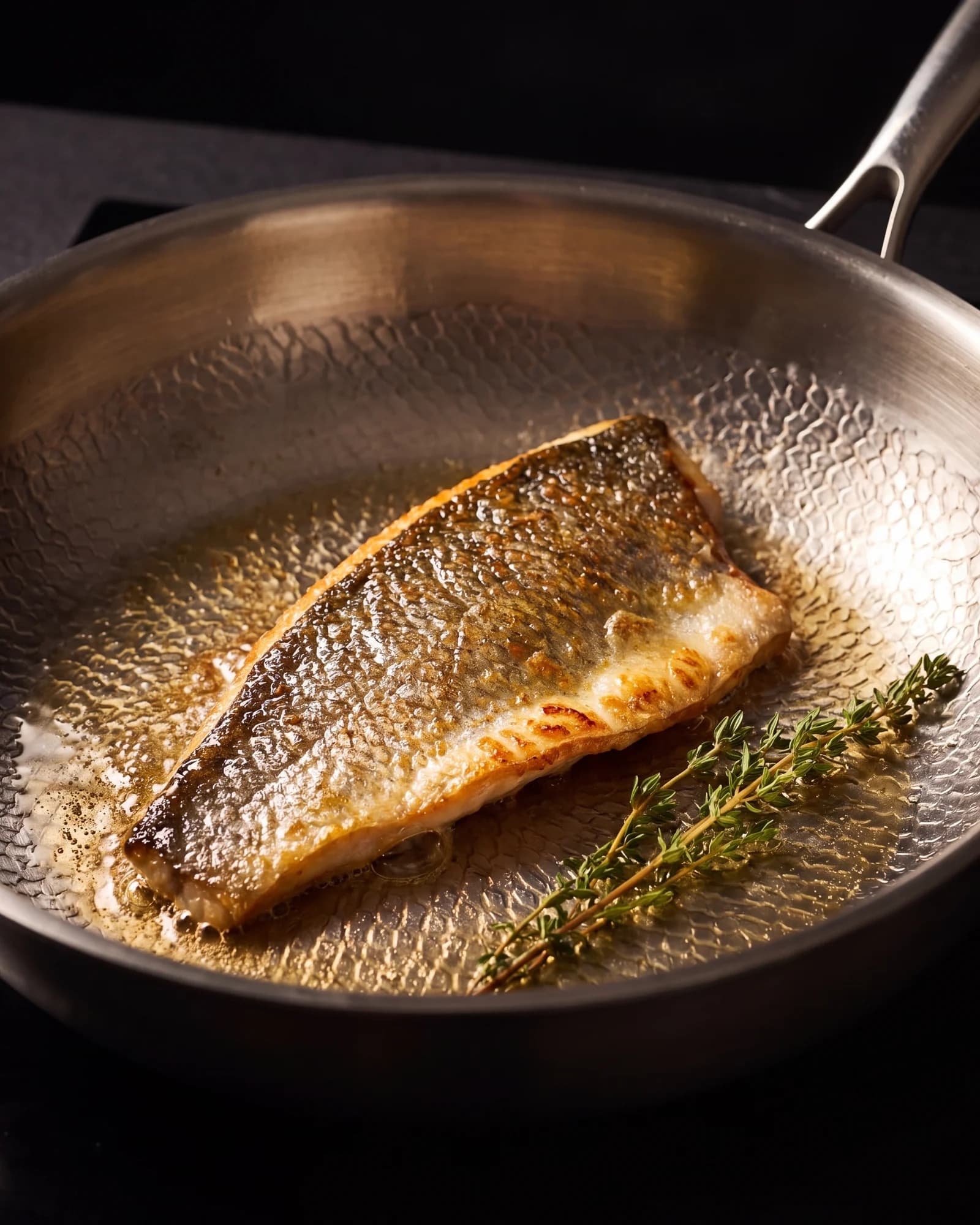
| Eggs and delicate food | Good once well seasoned | Stick easily | Release once preheated |
| Acidic food (tomato, wine) | Can strip the seasoning | Fine for most cooking | Fine |
| Metal utensils | Yes | Yes | Yes |
| Typical price | $20 to $60 | $40 to $150 | $119 to $169 (KAJI) |
Weights and prices are typical ranges for a pan around 11 inches.
Cast iron
Cast iron is a single piece of thick iron. It takes a while to heat up, but once hot it holds that heat better than anything, which makes it superb for searing and cornbread. Its nonstick quality comes from seasoning, a layer of oil baked into the surface, which you build and maintain over time.
- Best for: searing, high heat, oven cooking, people who enjoy the ritual of seasoning.
- Watch out for: the weight, rust if it stays wet, and acidic sauces that can strip the seasoning. No dishwasher.
Stainless steel
A good stainless pan has an aluminium core under a steel surface. It is tough, takes metal utensils and high heat, and cleans up easily. The trade-off is sticking: eggs, fish and lean meat grip a stainless surface unless you master the heat and use enough fat.
- Best for: browning, pan sauces, cooks who want a classic, restaurant-style pan.
- Watch out for: sticking with delicate food, and burnt-on stains that take some scrubbing.
Titanium
A titanium pan like KAJI is built in three layers: a titanium cooking surface, an aluminium core that spreads the heat, and a stainless steel base that works on induction. There is no coating and no seasoning to maintain. It is the lightest of the three, it does not rust, and titanium does not react with acidic food.
- Best for: everyday cooking, eggs and fish once preheated, people who want a pan that is easy to lift and easy to clean.
- Watch out for: the higher price, and the habit of preheating for a minute or two. It holds heat well, but not as long as heavy cast iron.
Which one should you choose?
Choose cast iron if
- you want the lowest price,
- you sear a lot and do not mind the weight,
- you enjoy looking after a pan.
Choose stainless steel if
- you want a classic, tough pan at a middle price,
- you are comfortable managing heat and fat to avoid sticking.
Choose titanium if
- you want a light pan that is easy to handle every day,
- you do not want to season or worry about rust,
- you cook eggs and fish often,
- you want one pan backed for decades.
Not sure about the size? Read which size frying pan you need, or try the size finder.
Quick questions
Which pan lasts the longest?
All three can last for decades with normal care, because none has a coating to wear out. KAJI backs every titanium pan with a 50-year warranty.
Do I need to season a titanium pan?
No. It is ready to cook out of the box. Heating a thin film of oil in it once can help food release during the first uses.
Is titanium lighter than cast iron?
Much lighter. The KAJI 28 cm weighs about 1.8 lb, where a cast iron skillet of similar size often weighs 5 lb or more.
Can these pans go in the oven?
Cast iron and most stainless pans can. The KAJI titanium pan is oven-safe up to 500 °F (260 °C).