In use
Cooking & care guide
A pan without a coating asks for a little technique and gives you control in return.
Everyday cooking
Vegetables, eggs, fish and meat — what to expect, and how to get good results from the first use.
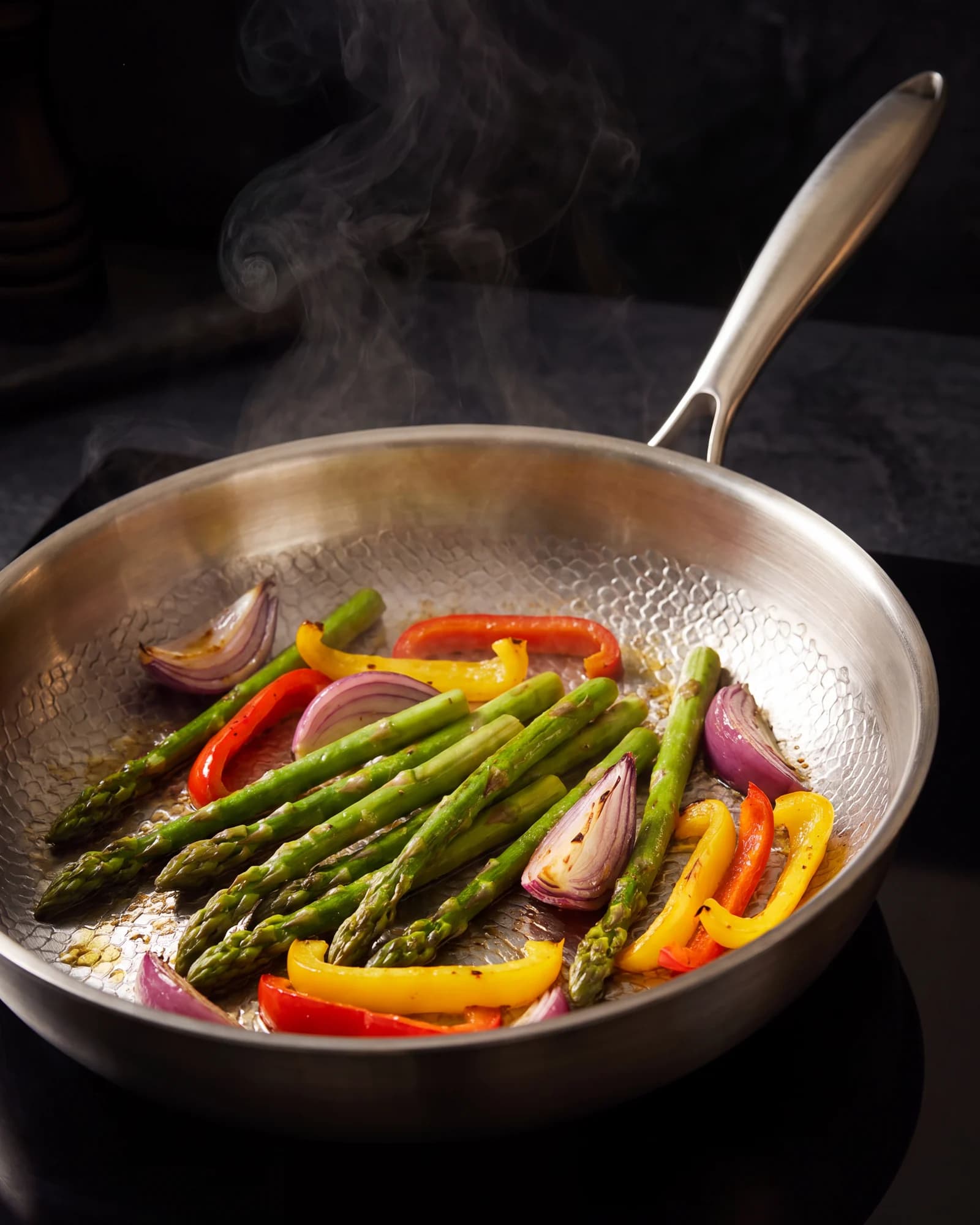
What to expect
Heat distribution
Draft — to be validatedTitanium conducts heat less readily than aluminium or copper. Preheat gradually and use moderate heat for even results.
Sticking
Draft — to be validatedWithout a coating, food can stick — especially eggs and lean proteins in a cold pan. Technique matters: preheat, add fat, let food release.
Precision and technique
Preheating, fat, heat level and timing. The four variables that decide whether food releases cleanly.
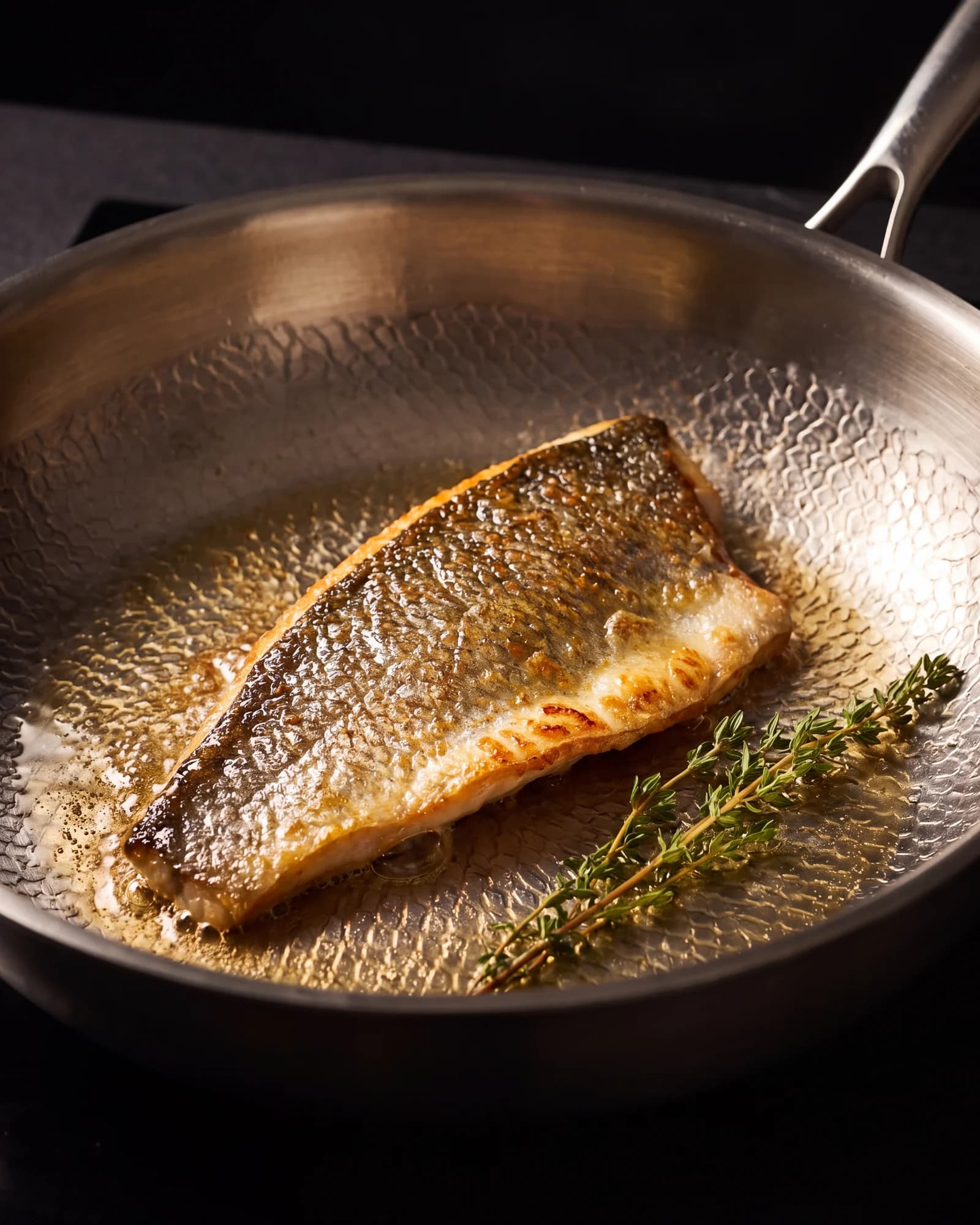
Step by step
Draft — to be validatedPreheat gently
Place the empty pan over low-to-medium heat for one to two minutes. Avoid high heat on an empty pan.
Add fat once warm
Add oil or butter when the pan is warm and let it heat until it shimmers.
Don't crowd the pan
Leave space between pieces so moisture escapes and food sears instead of steaming.
Let food release
Proteins often stick at first and release once a crust forms. Wait before turning.
Clean while warm
Deglaze or rinse with warm water once the pan has cooled slightly — never plunge a hot pan into cold water.
Cleaning and care
How to wash, dry and store the pan so the hammered finish keeps its look.
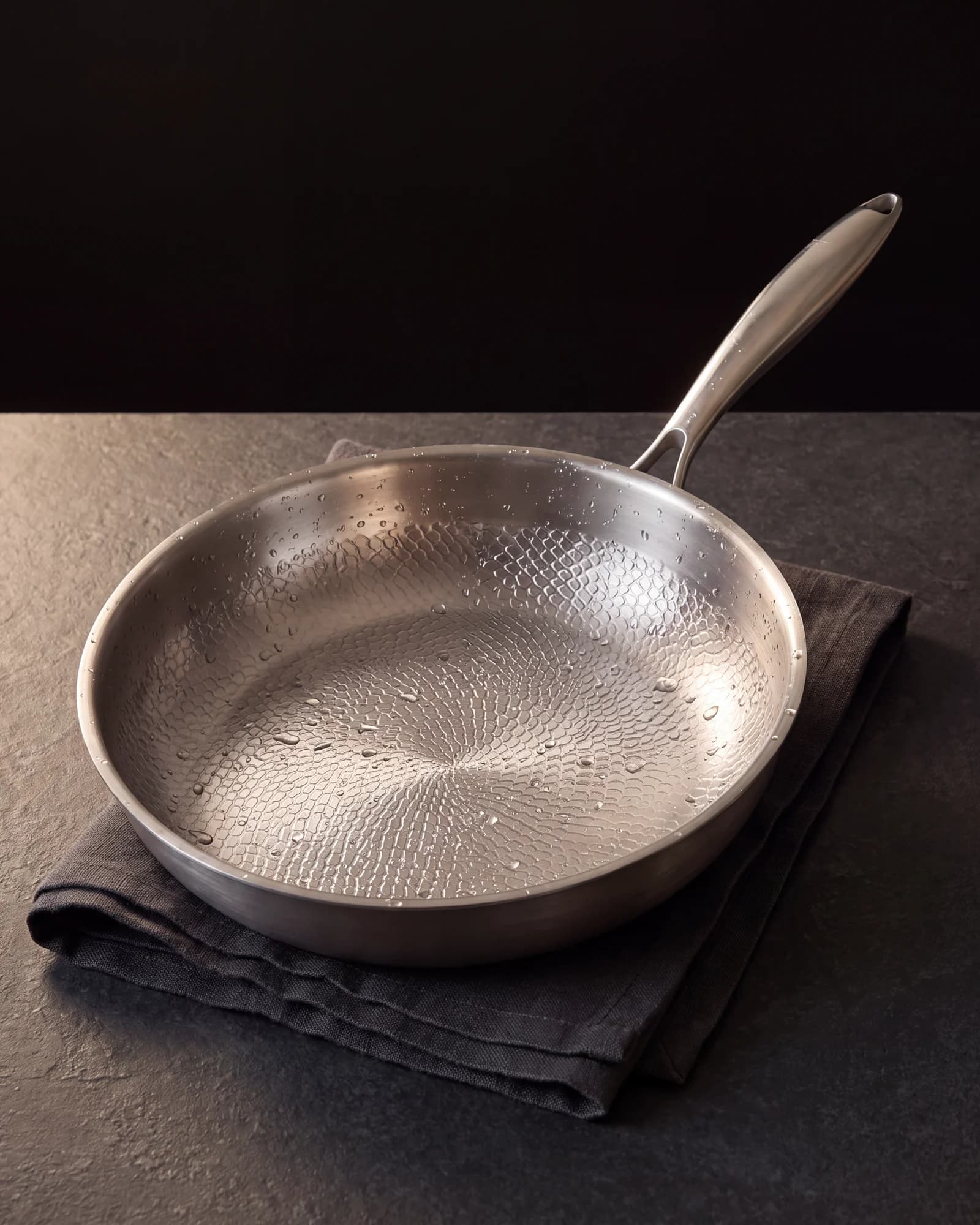
Cleaning and storage
Draft — to be validated- Let the pan cool before washing.
- Wash with warm water and a soft sponge; avoid harsh abrasives on the hammered finish.
- Dry immediately and completely.
- Dishwasher suitability: to be confirmed.
More questions? Read the FAQ.