
Titanium vs nonstick pans: what's the real difference?
By KAJI · November 7, 2026
What a nonstick pan really is
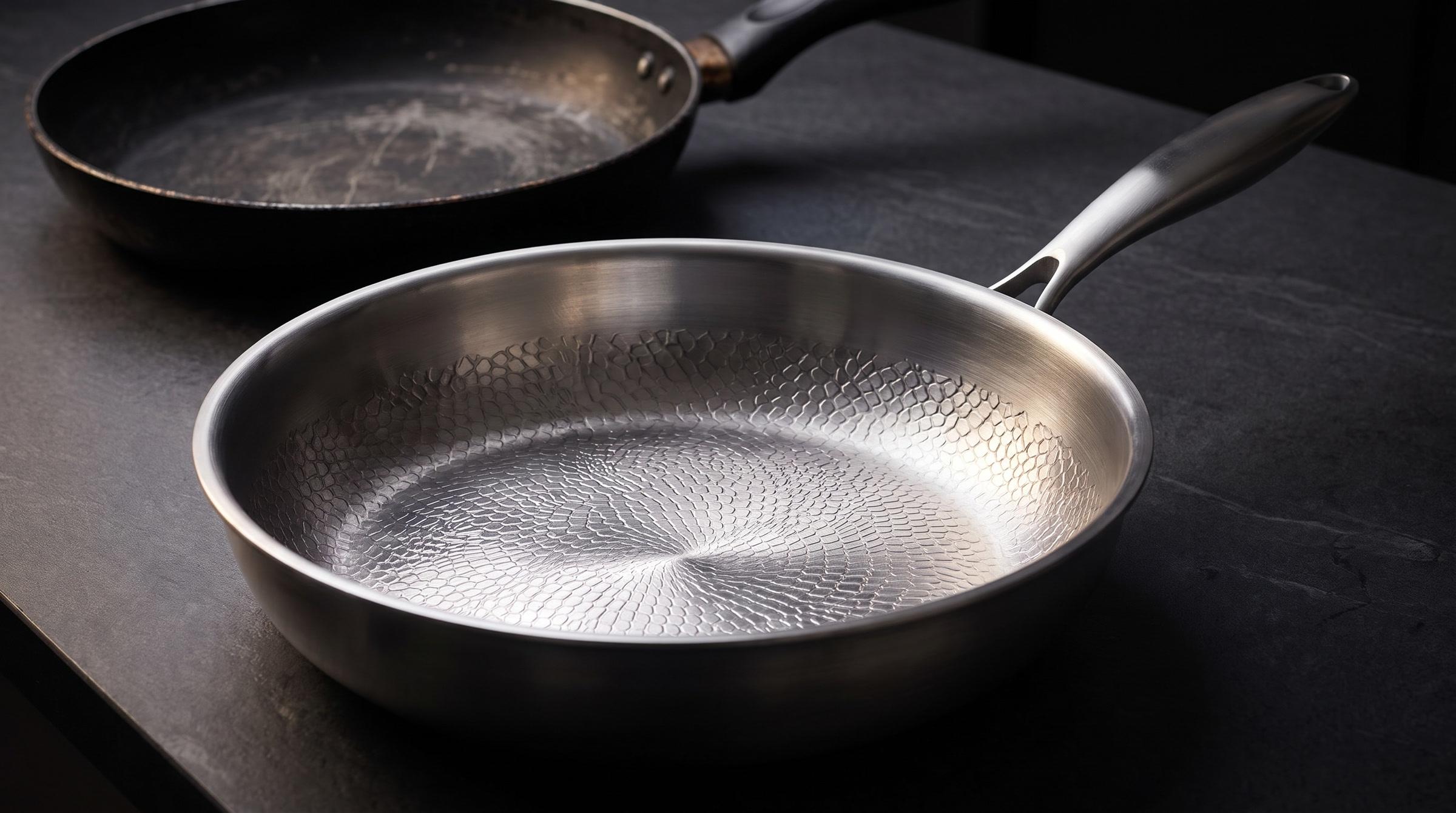
A nonstick pan is usually an aluminium pan with a slippery coating on top. There are two main families:
- PTFE coatings, the material best known under the Teflon brand. Very slippery, but soft: they scratch, and they start to break down if the pan is overheated, around 500 °F (260 °C).
- Ceramic coatings, a thin glass-like layer. Free of PTFE, but they often lose their slickness faster than PTFE does.
Both work beautifully when new. The catch is that a coating is a layer, and layers wear. Metal spatulas, scouring pads, high heat and the dishwasher all speed that up, which is why most makers ask you to avoid them.
What a titanium pan is
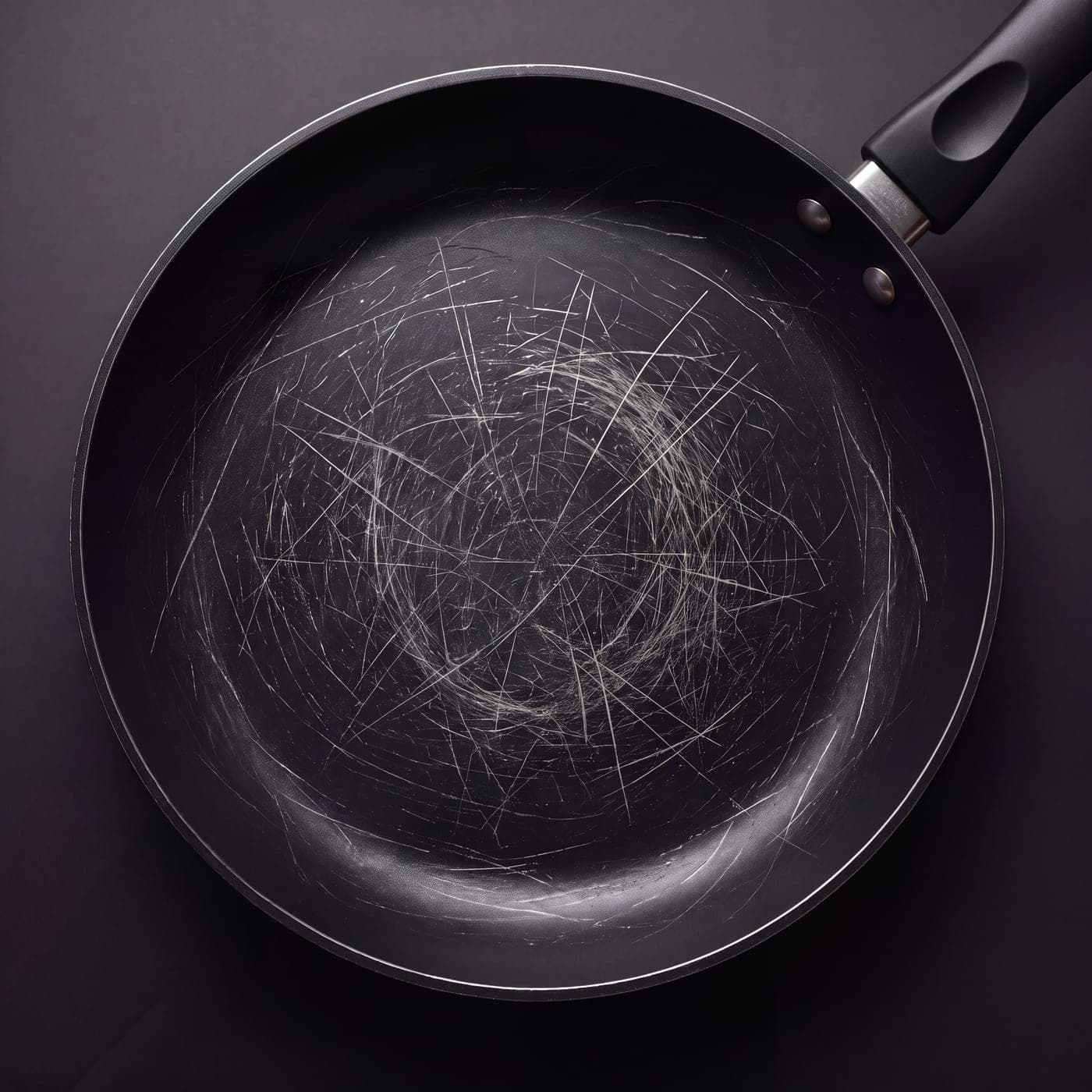
A titanium pan like KAJI is built in three layers: a titanium cooking surface, an aluminium core that spreads the heat, and a stainless steel base that works on every stovetop, induction included. Nothing is sprayed or bonded on top: you cook directly on the metal.
Because there is no coating, there is nothing to scratch off or flake into your food. The hammered finish is part of the metal itself. Learn more about how the pan is built.
Side by side
| Nonstick | KAJI titanium | |
|---|---|---|
| Cooking surface | A coating (PTFE or ceramic) sprayed onto an aluminium pan | Titanium, with no added coating |
| Food release | Effortless while the coating is new | Easy once the pan is preheated; a little fat helps |
| Metal utensils | Usually not recommended | Yes, spatulas and whisks included |
| High heat and searing | Most makers advise low to medium heat | Yes, and oven-safe up to 500 °F (260 °C) |
| Dishwasher | Hand washing often recommended | Dishwasher-safe |
| How long it lasts | Until the coating wears out | Built to last: 50-year warranty |
| Typical price | $20 to $80 | $119 to $169 (KAJI) |
How they cook
Eggs and delicate food
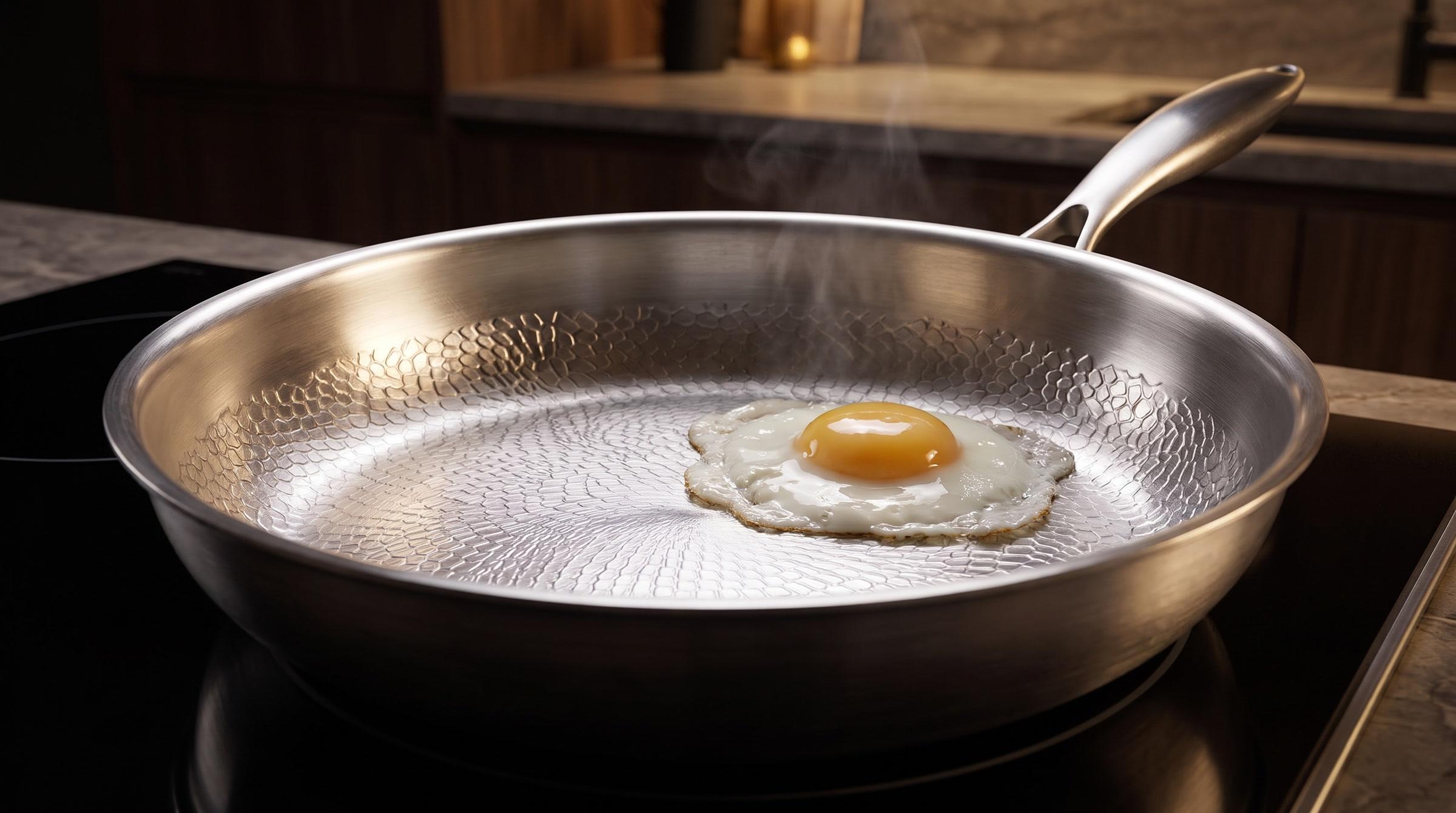
This is where a fresh nonstick pan shines: drop an egg in a cold pan and it slides. A titanium pan needs one minute of preheating on medium heat first. Once it is hot, an egg cooks and releases even without oil, and a little butter or oil makes it easier and tastier, so we recommend it. Give the egg a moment to set before you move it.
Searing, browning and high heat
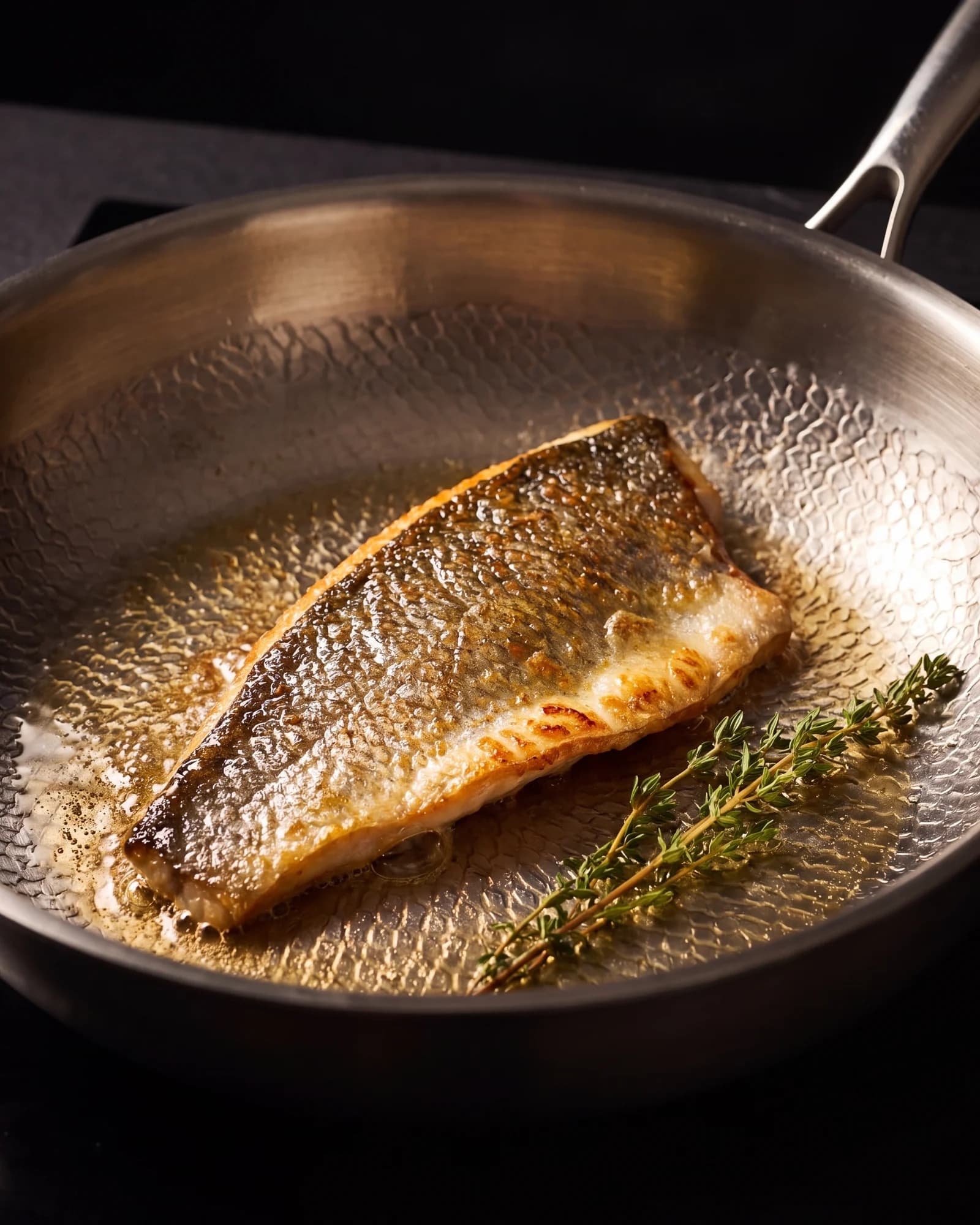
Here titanium wins. You can sear a steak, brown vegetables or finish a dish in the oven without worrying about damaging a coating. Nonstick makers usually ask you to stay at low to medium heat, which is not enough for a real crust.
Utensils and cleaning
With nonstick, it is wood or silicone only, and often hand washing. With titanium, metal spatulas and whisks are fine and the pan is dishwasher-safe, though a quick hand wash keeps the hammered finish at its best. See our cleaning and care guide.
What each one costs over ten years
A nonstick pan looks cheaper, but it is a pan you buy again. For example, a $40 nonstick pan replaced every two to three years adds up to about $130 to $200 over ten years, and you start over each time the coating goes.
A titanium pan costs more on day one, and then you keep it. A KAJI 28 cm is $149 once, with a 50-year warranty against defects and a 360-day trial to make sure it suits you.
The honest downsides of titanium
- It costs more up front than a basic nonstick pan.
- It asks for a habit: preheat a minute or two before you add food. Rush it, and food can stick, as on any pan without a coating.
- It is not as slippery as a brand-new nonstick pan. If you want food to glide with no fat and no preheating, nonstick will feel easier.
- Like stainless steel, it can show heat tints over time. They are cosmetic and do not affect cooking.
Which one should you choose?
Choose nonstick if
- you mostly cook eggs and pancakes on low heat and want zero technique,
- you are fine replacing the pan every few years,
- price today matters more than price over time.
Choose titanium if
- you are tired of coatings that scratch and wear out,
- you want to sear, brown and use high heat or the oven,
- you want to use metal utensils and the dishwasher,
- you would rather buy one pan and keep it.
Not sure which size? Our size finder recommends the 22, 26, 28 or 30 cm pan in four questions.
Quick questions
Is a titanium pan nonstick?
Not in the way a coated pan is. It has no coating, so it relies on preheating, and a little fat if you like. Done that way, food releases cleanly.
Does a titanium pan have PTFE or PFAS?
No. There is no coating on the cooking surface, so there is no PTFE, PFOA or other PFAS coating.
Can I use a titanium pan on induction?
Yes. The stainless steel base works on induction, gas, electric and ceramic stovetops.
How long does a titanium pan last?
With no coating to wear out, it is made to last for decades. KAJI backs every pan with a 50-year warranty.