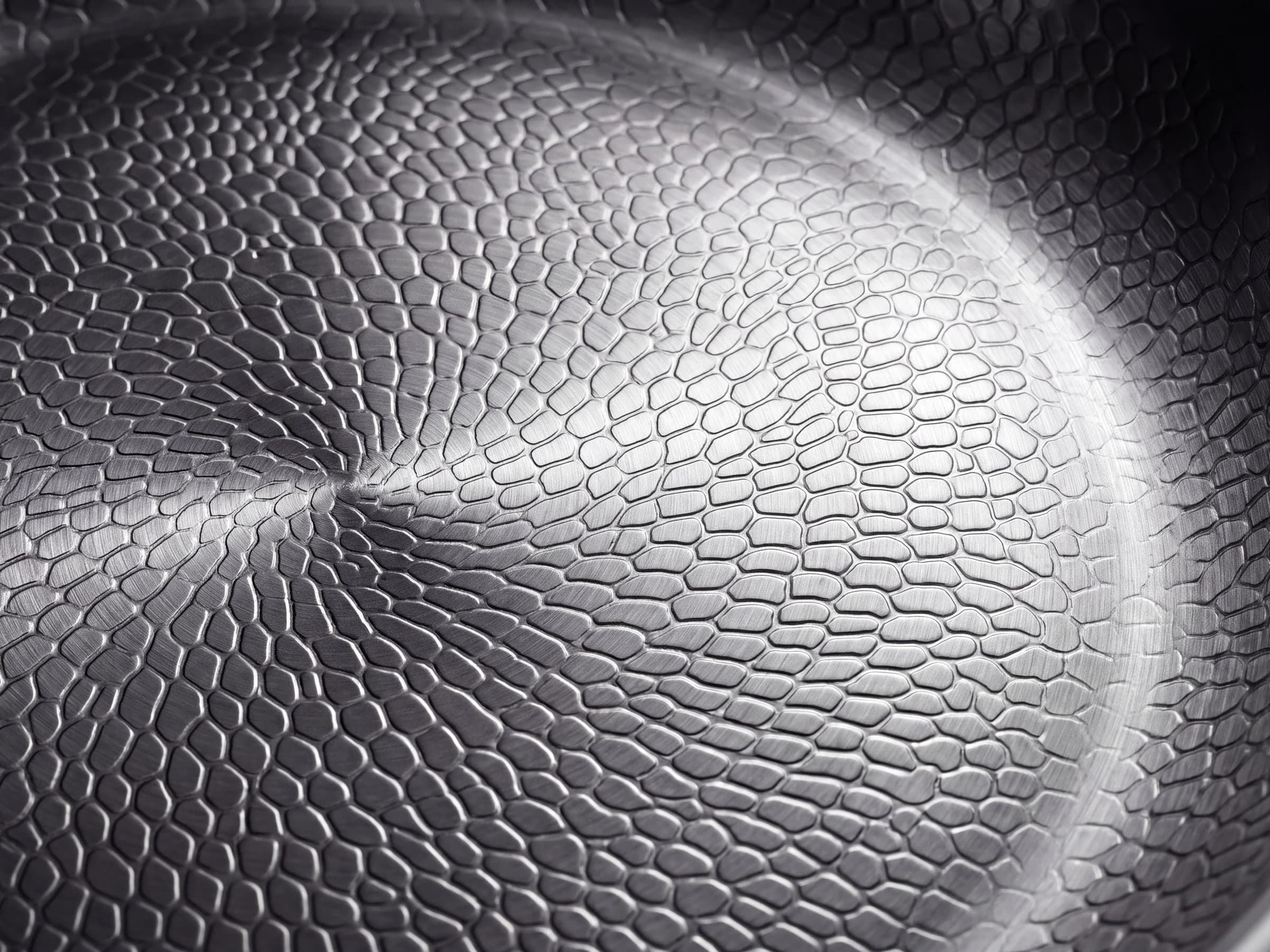
What to observe
Hammered surface
Look at how side light breaks across the facets. The texture is part of the metal, not a printed pattern or a coating.

A hammered titanium cooking surface with no added coating to wear off, backed by a 50‑year warranty.
4.6 stars · 16k reviews







Holiday sale · prices until Jan 3
Every pan and set at up to 70% off, our lowest prices of the year.
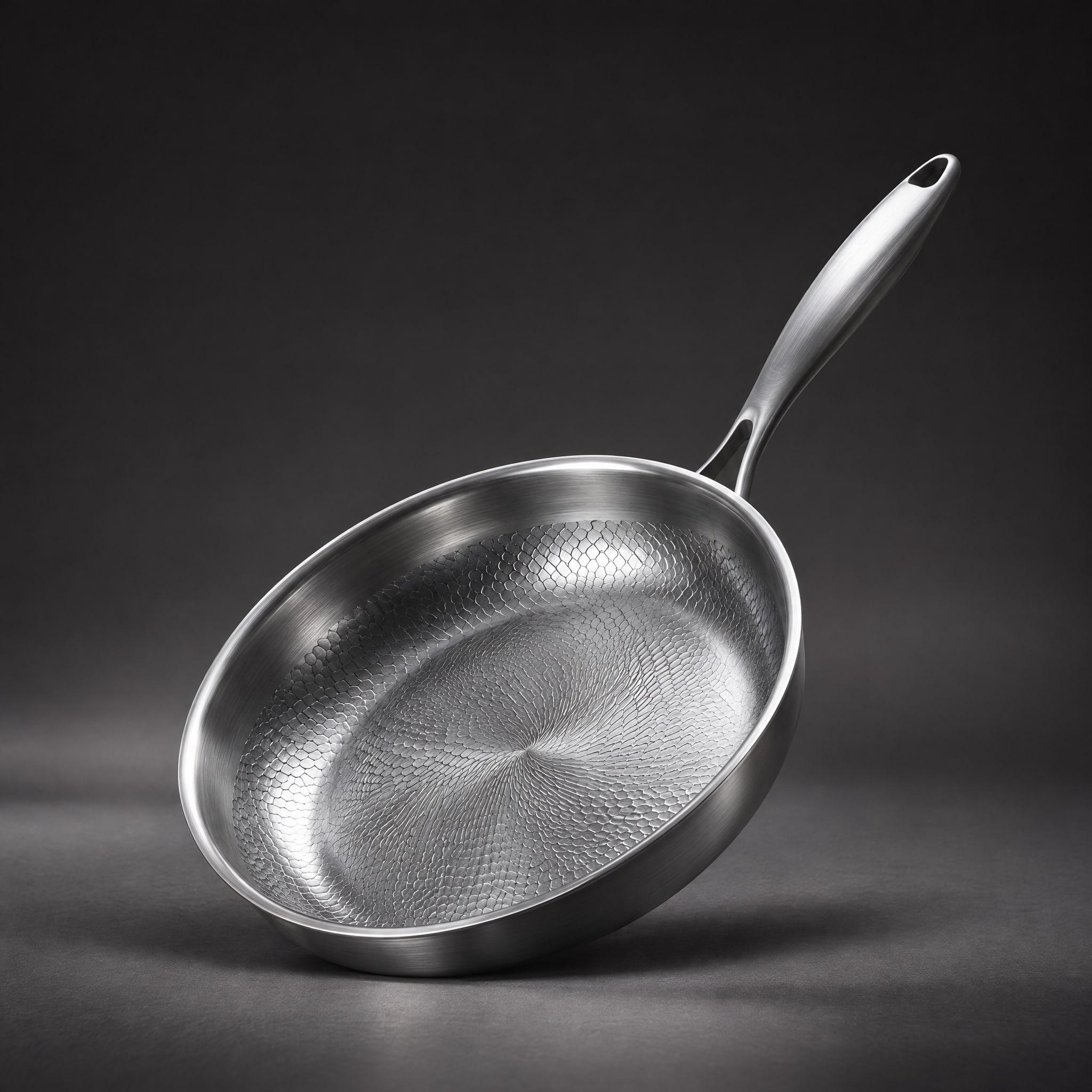 Early Black Friday-70%
鍛冶Japanese craftsmanship
22 · 26 · 28 · 30 cm
From$119
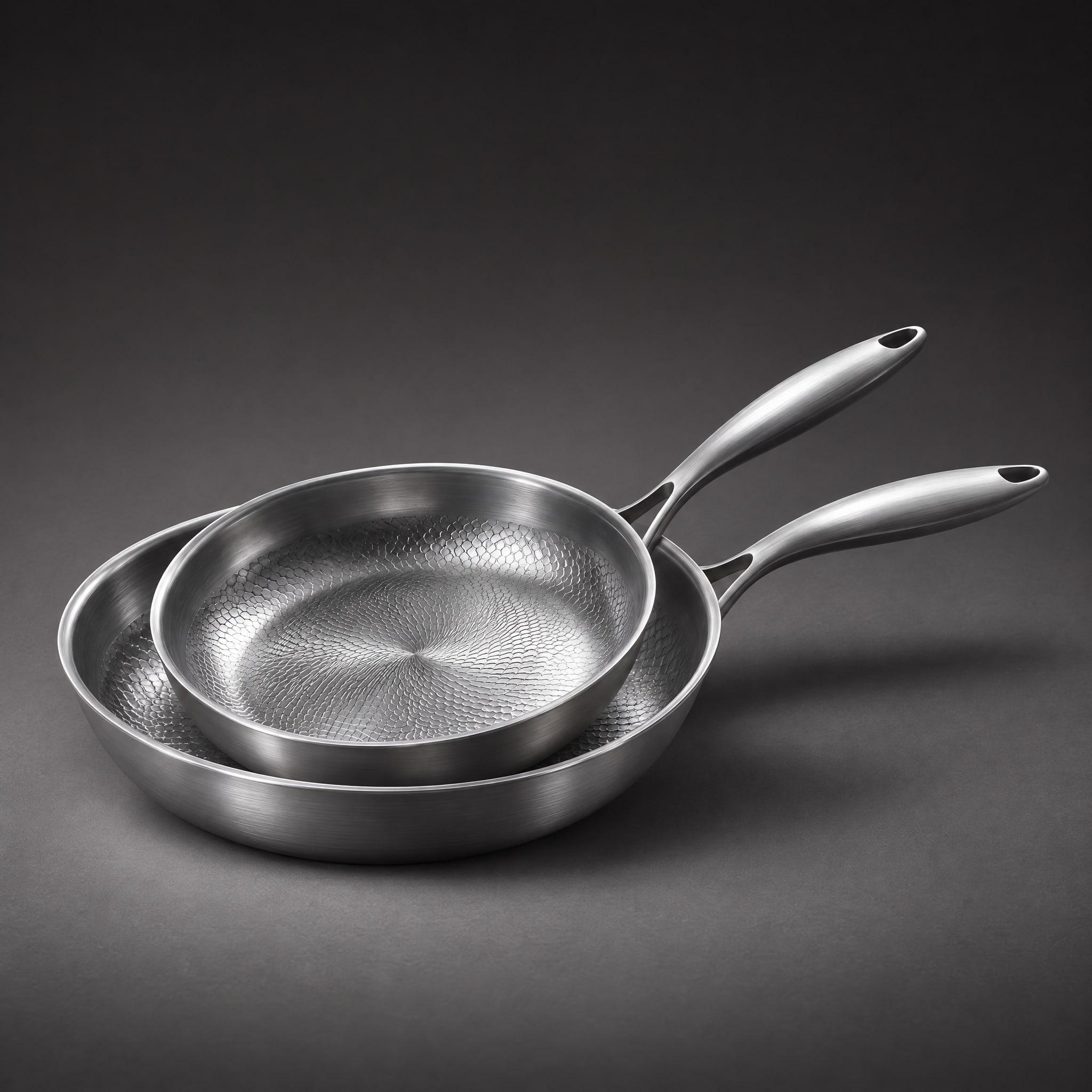 Early Black Friday-70%
鍛冶Japanese craftsmanship
22 + 28 cm · lids included
$229
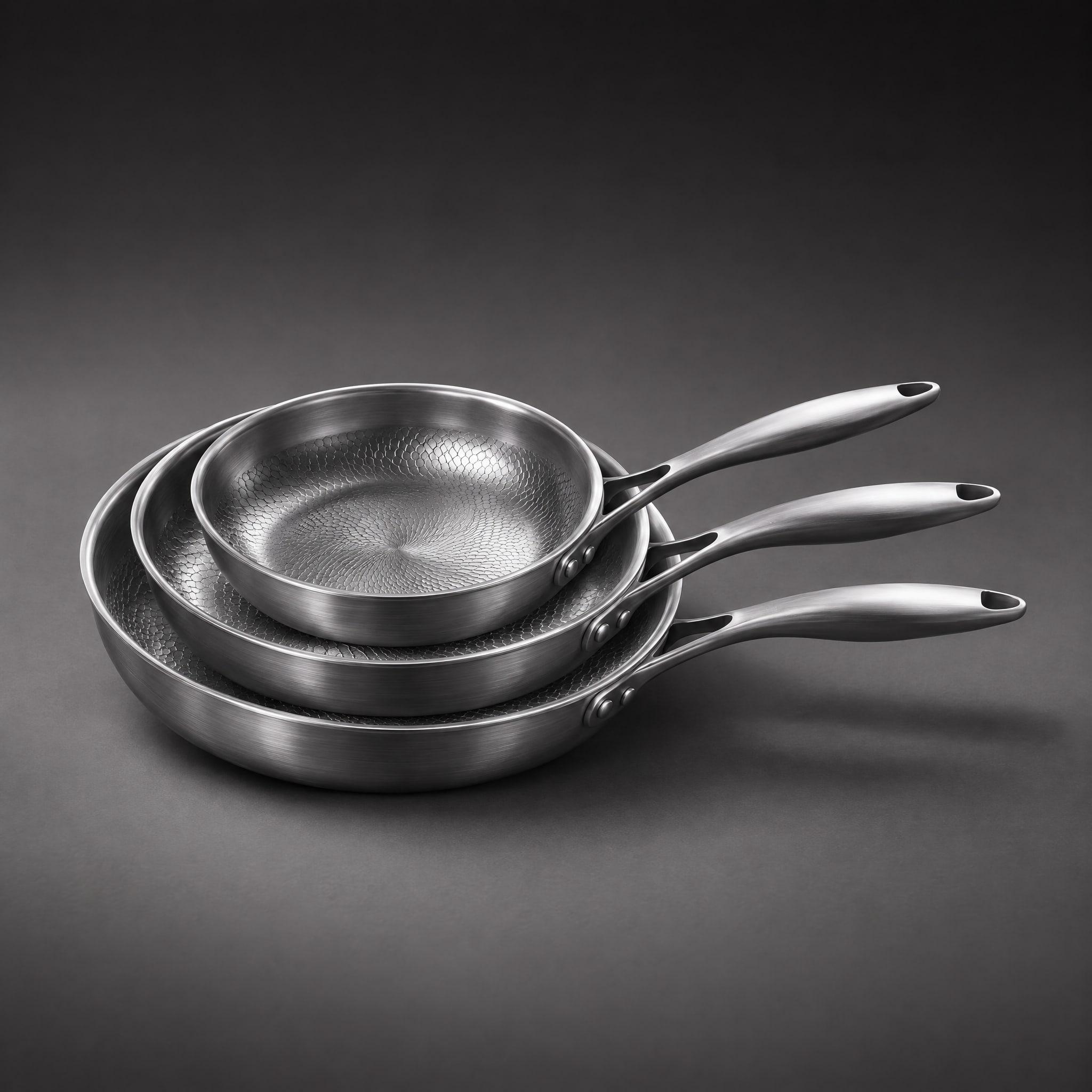 Early Black Friday-70%
鍛冶Japanese craftsmanship
22 + 26 + 28 cm · lids included
$319
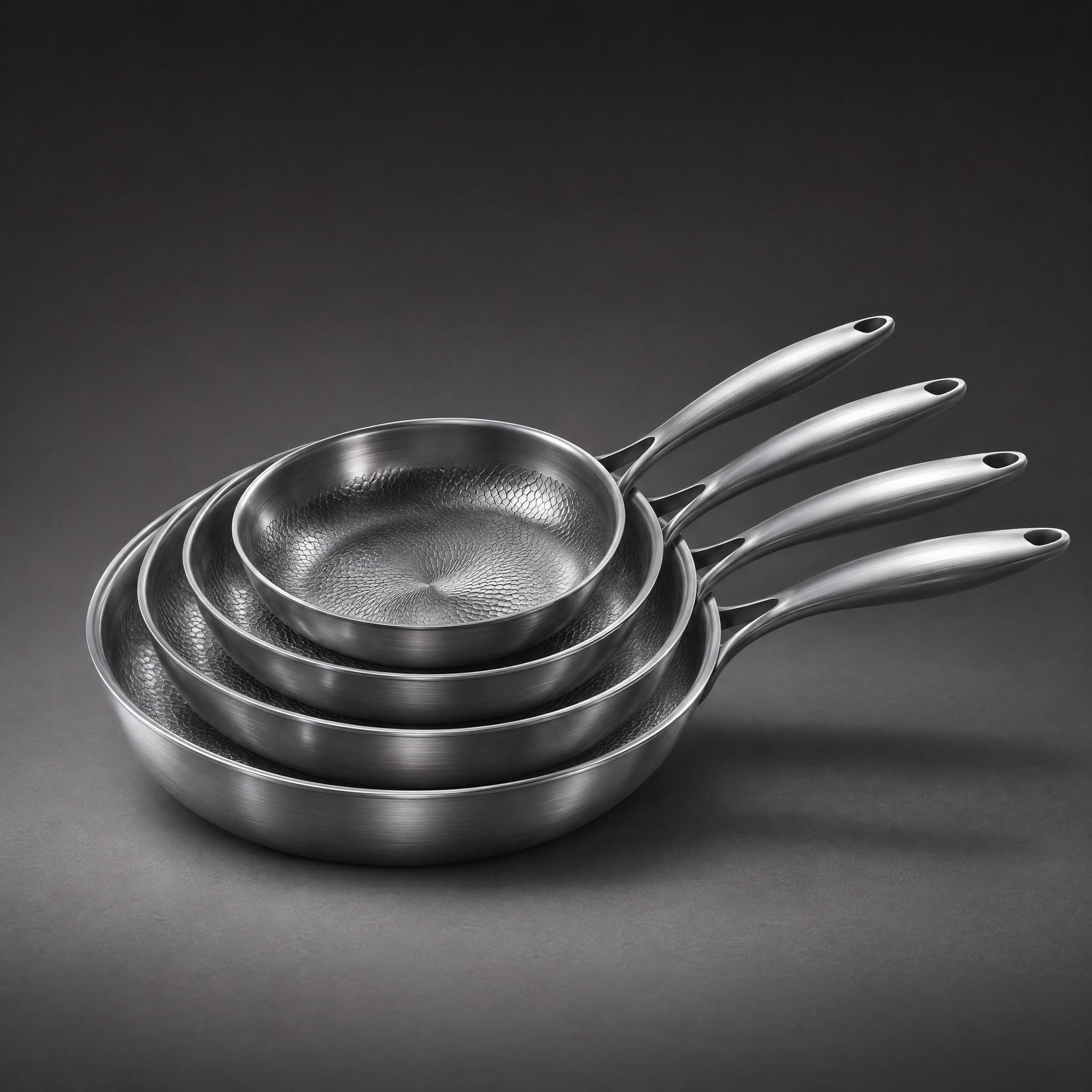 Early Black Friday-70%
鍛冶Japanese craftsmanship
22 + 26 + 28 + 30 cm · lids included
$429
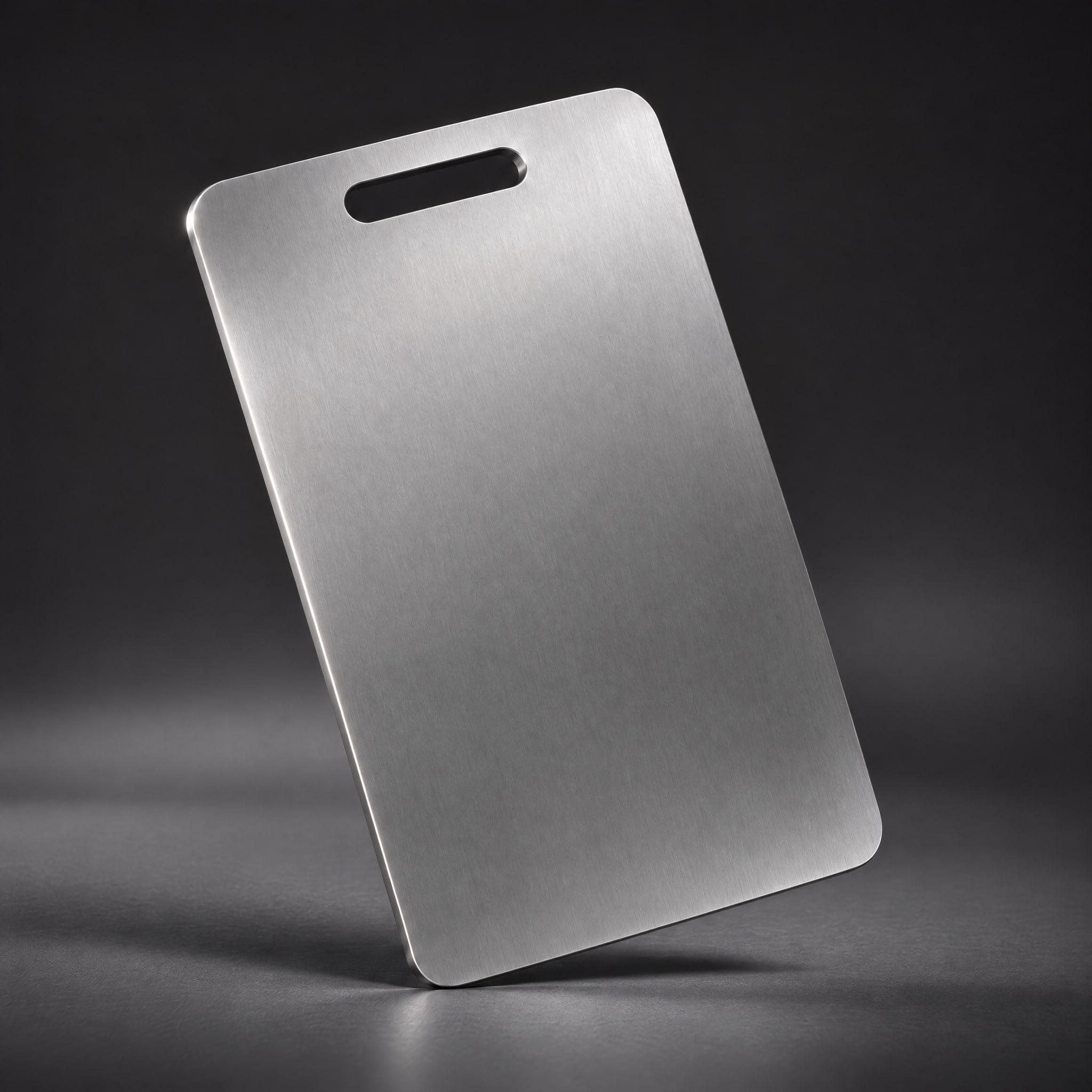 Early Black Friday-70%
鍛冶Japanese craftsmanship
S · M · L · spatula included
From$69
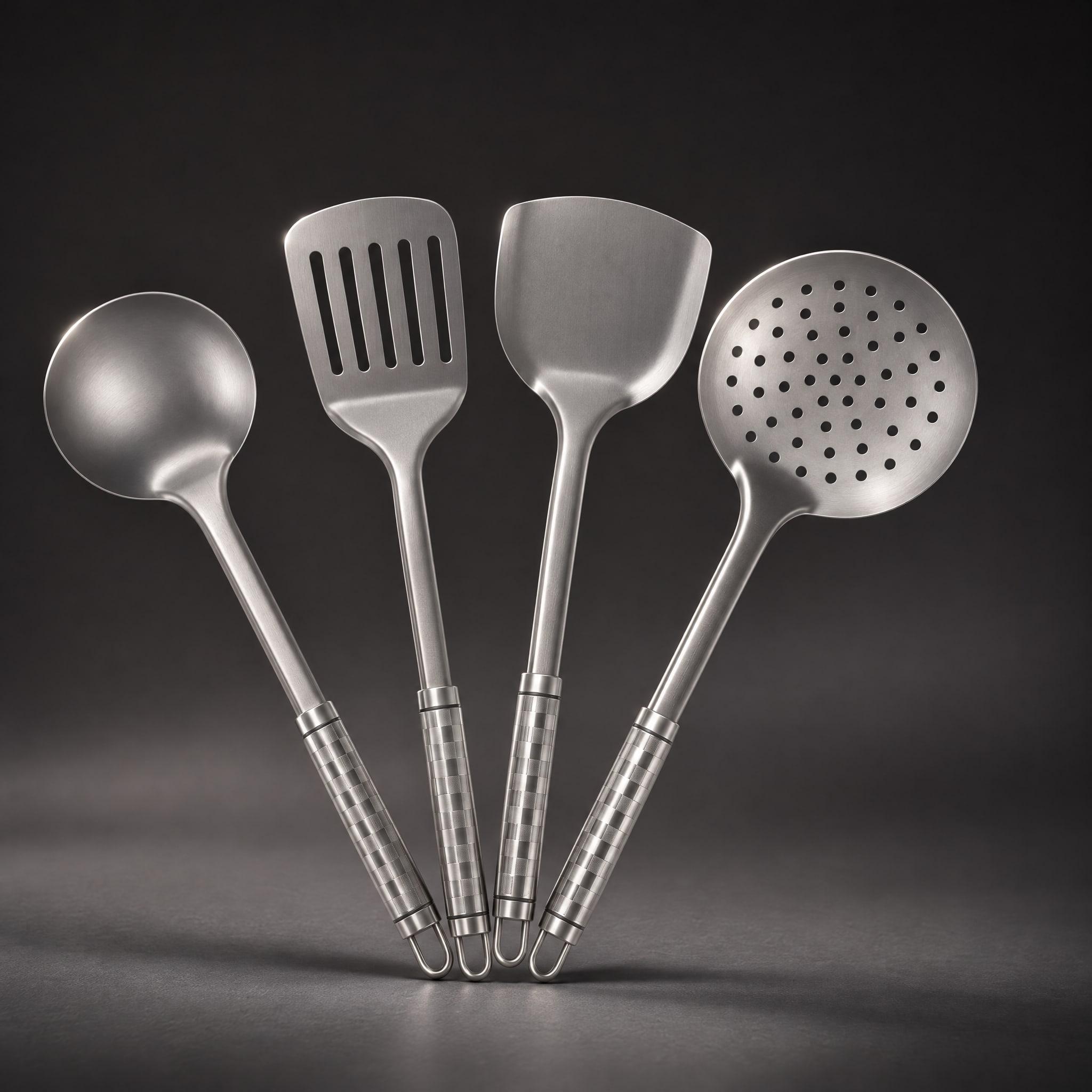 Early Black Friday-70%
鍛冶Japanese craftsmanship
4 pieces
$69
The problem
Pick the pan you cook with now. See what can end up in your food.
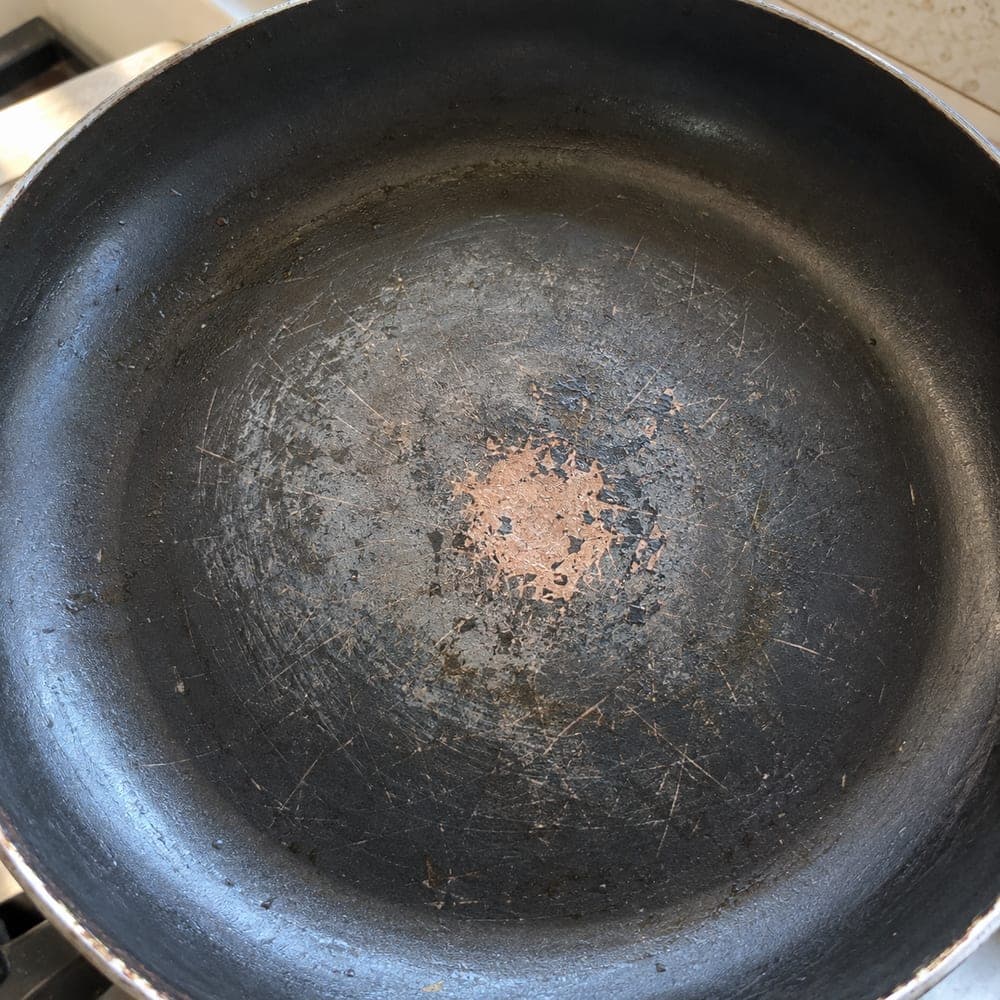
Empty preheating or searing pushes the PTFE coating past ~500°F (260°C). It starts to break down and gives off fumes, and every scratch sheds micro-flakes of coating into your food.
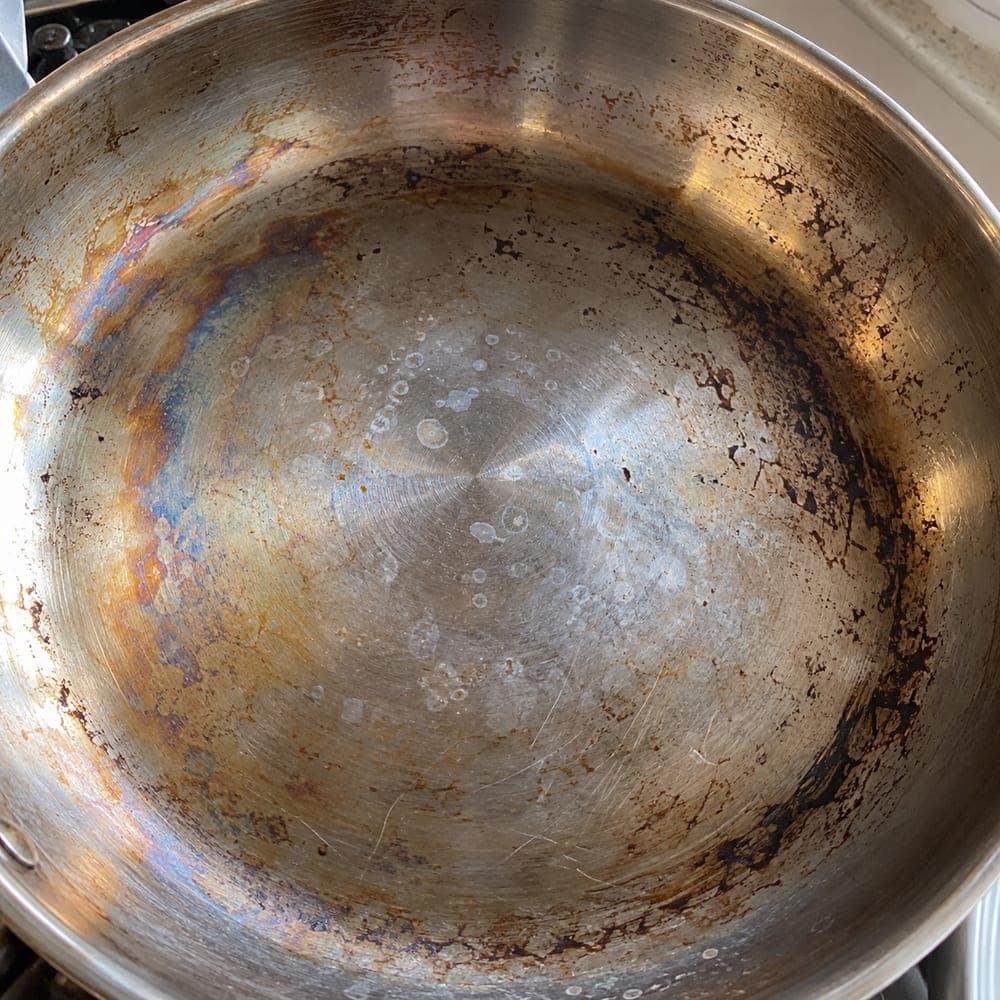
18/10 steel contains up to 10% nickel and 18% chromium. Tomato sauce, wine or lemon slowly pull these metals out of the surface. The longer it simmers, the more ends up in your food.
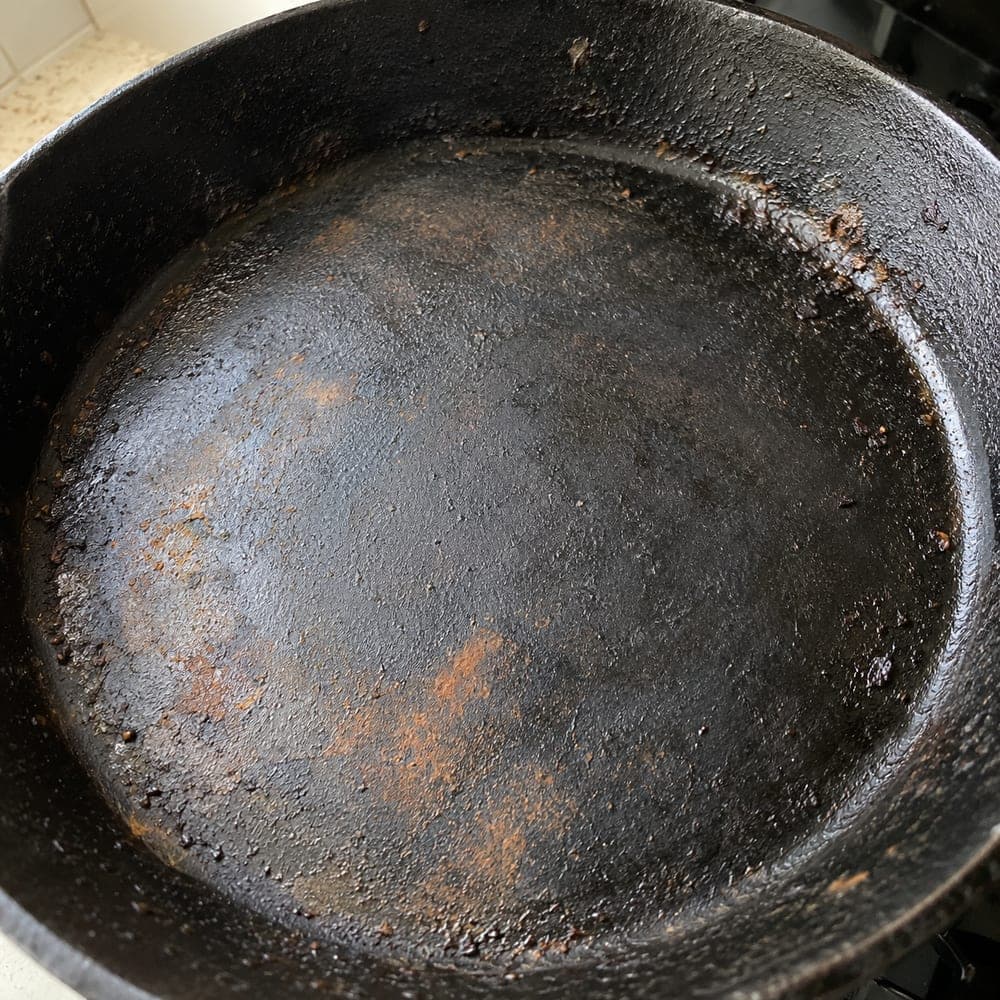
Bare iron is protected only by a layer of baked-on oil. Acidic food or soap strips it away, and the raw iron reacts with your food. It rusts if it stays wet.
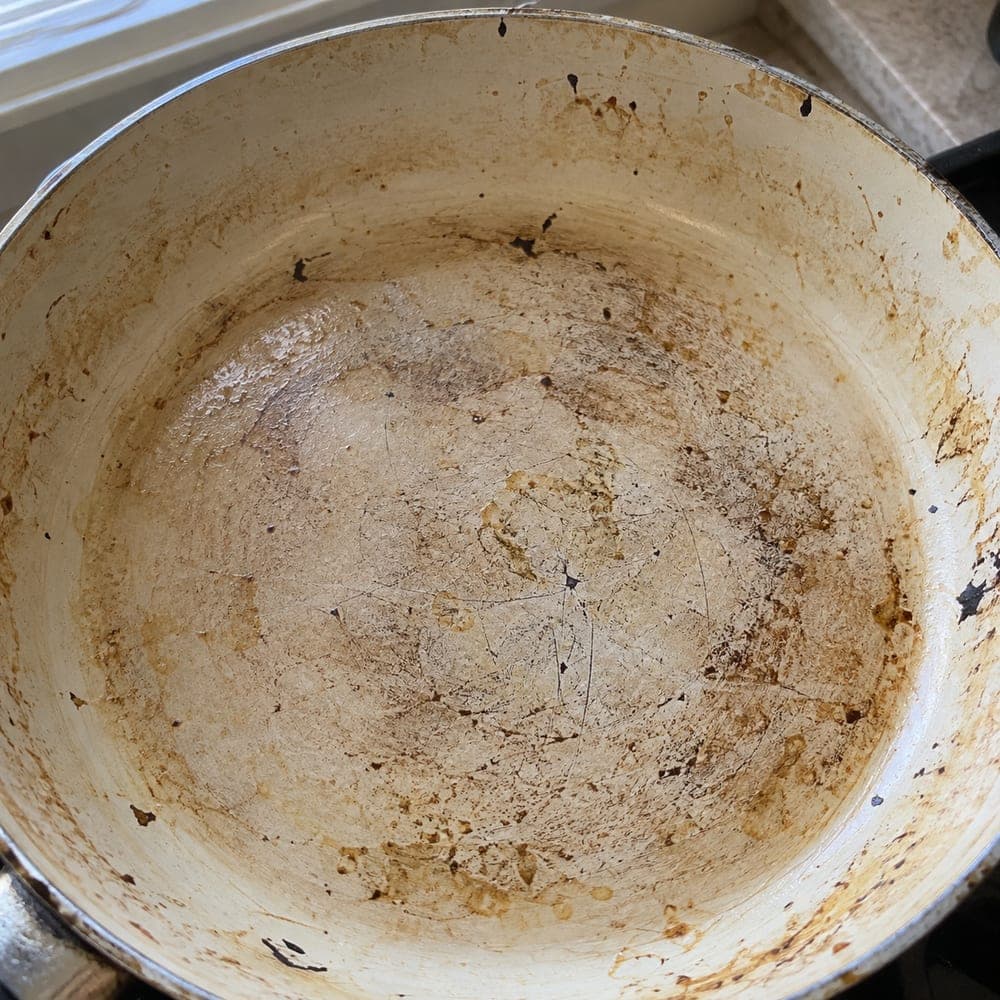
A thin sol-gel coating is sprayed over an aluminium body. Heat and utensils wear it down within months. Chips end up in your food, and the aluminium underneath starts touching it directly.
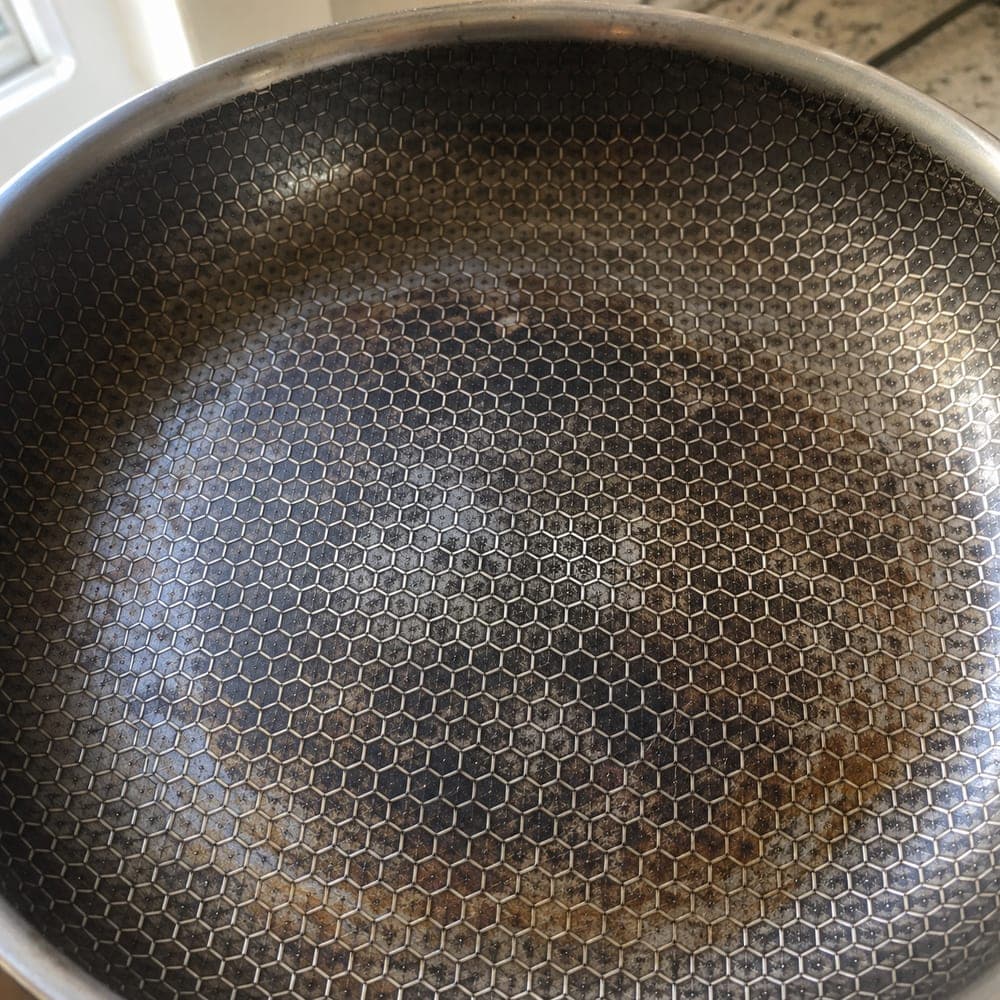
A steel pattern laid over a non-stick coating. It looks like steel, but you still cook on PTFE. At high heat the coating between the ridges breaks down, just like a regular non-stick pan.
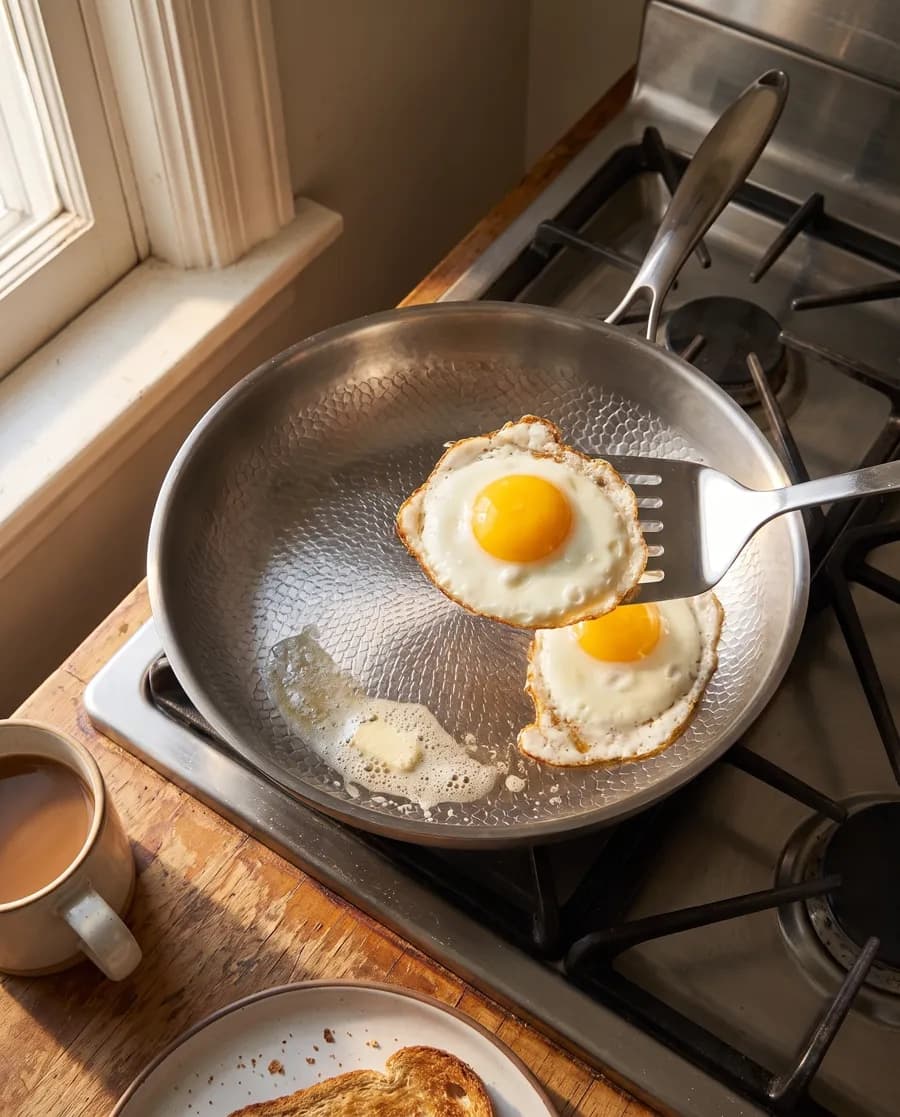
A titanium cooking surface, the same metal used in medical implants because the body does not react to it. No coating to break down, at any temperature, with any utensil.
Sources: U.S. EPA (PFAS), U.S. FDA, Kamerud et al., Journal of Agricultural and Food Chemistry (2013).
Illustration only
A closer look
Surface, handle, profile: what each one tells you about how the pan cooks.
What to observe
Look at how side light breaks across the facets. The texture is part of the metal, not a printed pattern or a coating.
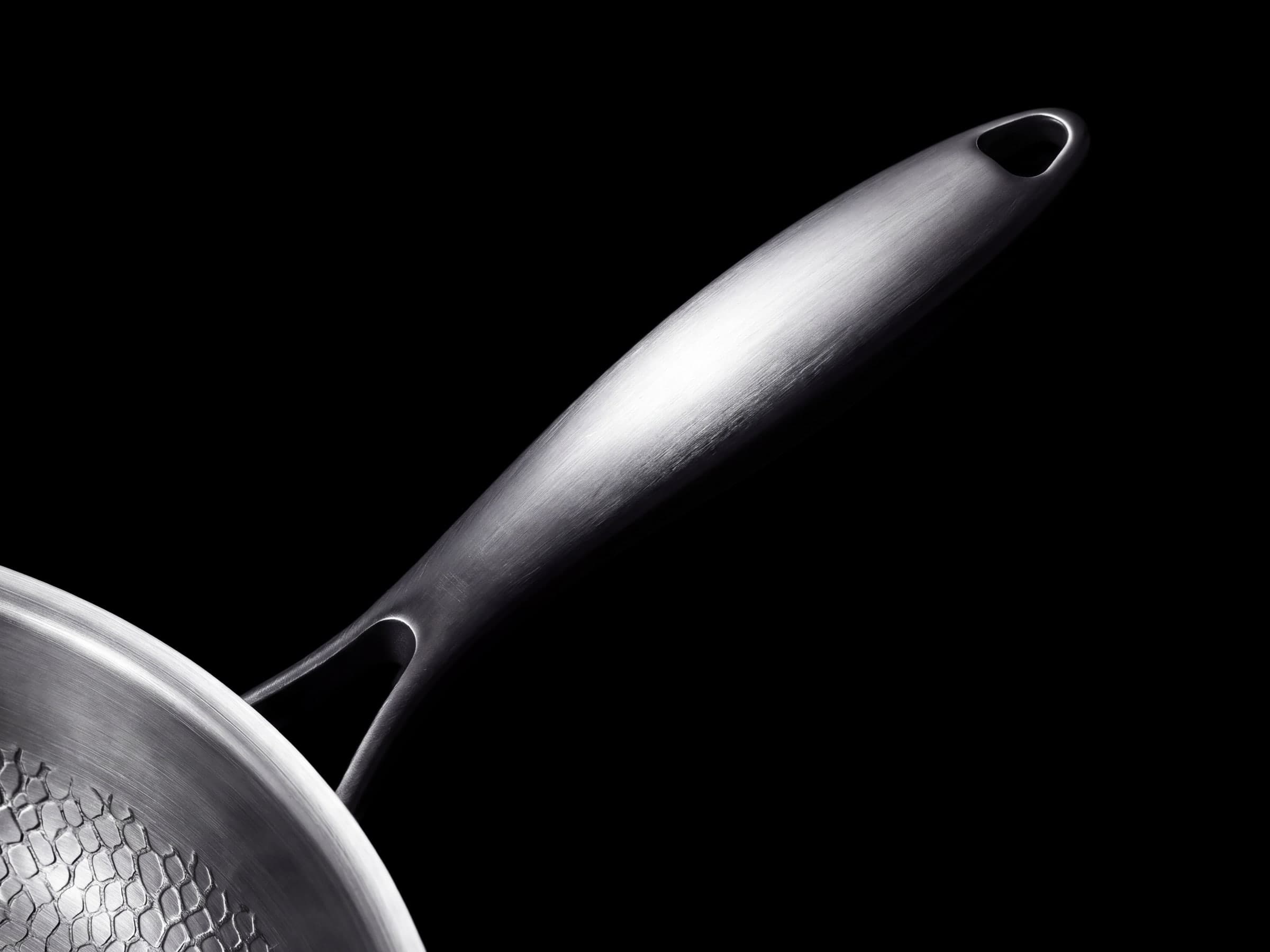
What to observe
Note the handle's length and angle — it keeps your hand away from the heat source.
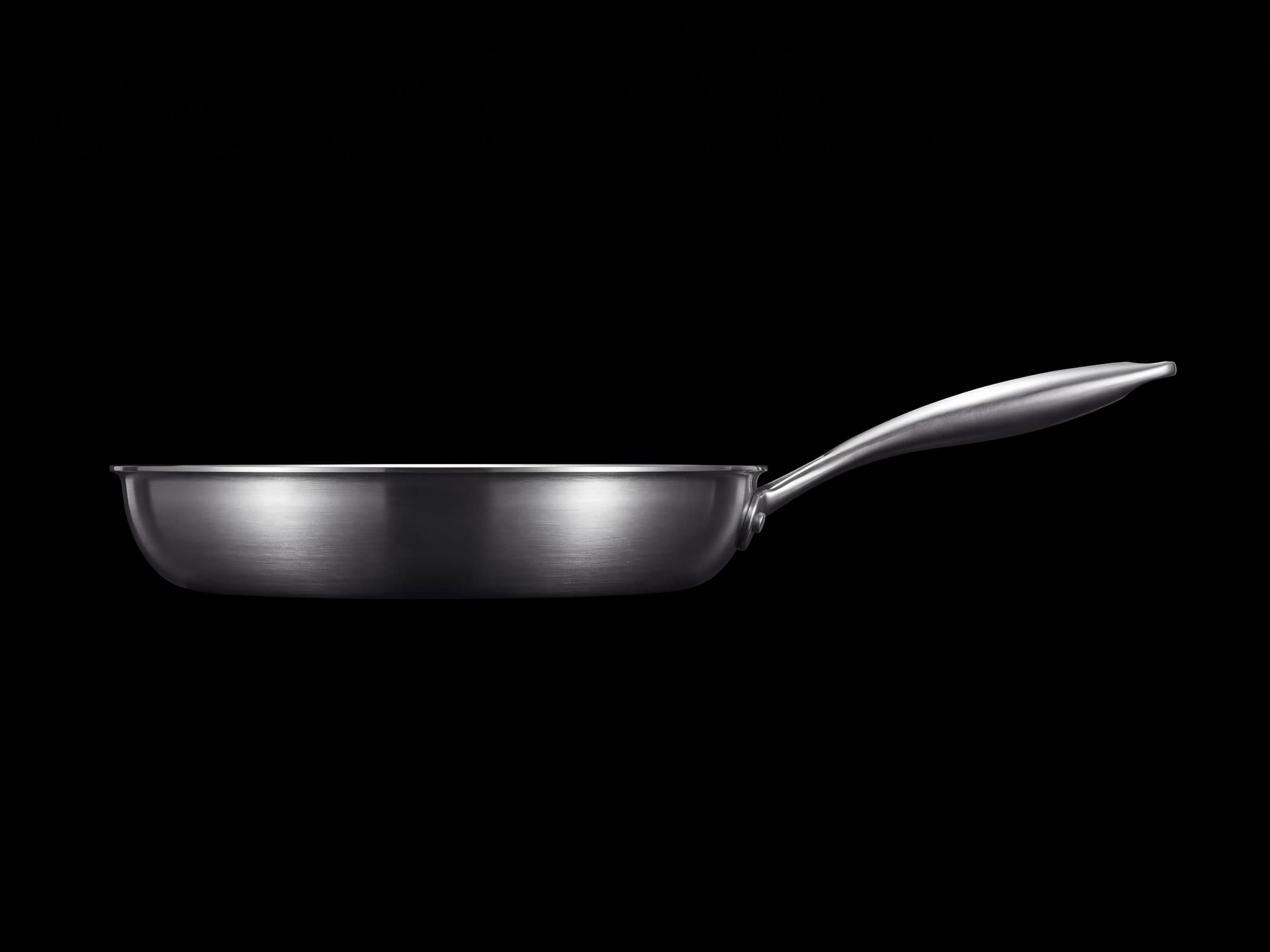
What to observe
The flared walls help moisture escape when searing and make it easy to slide food out.
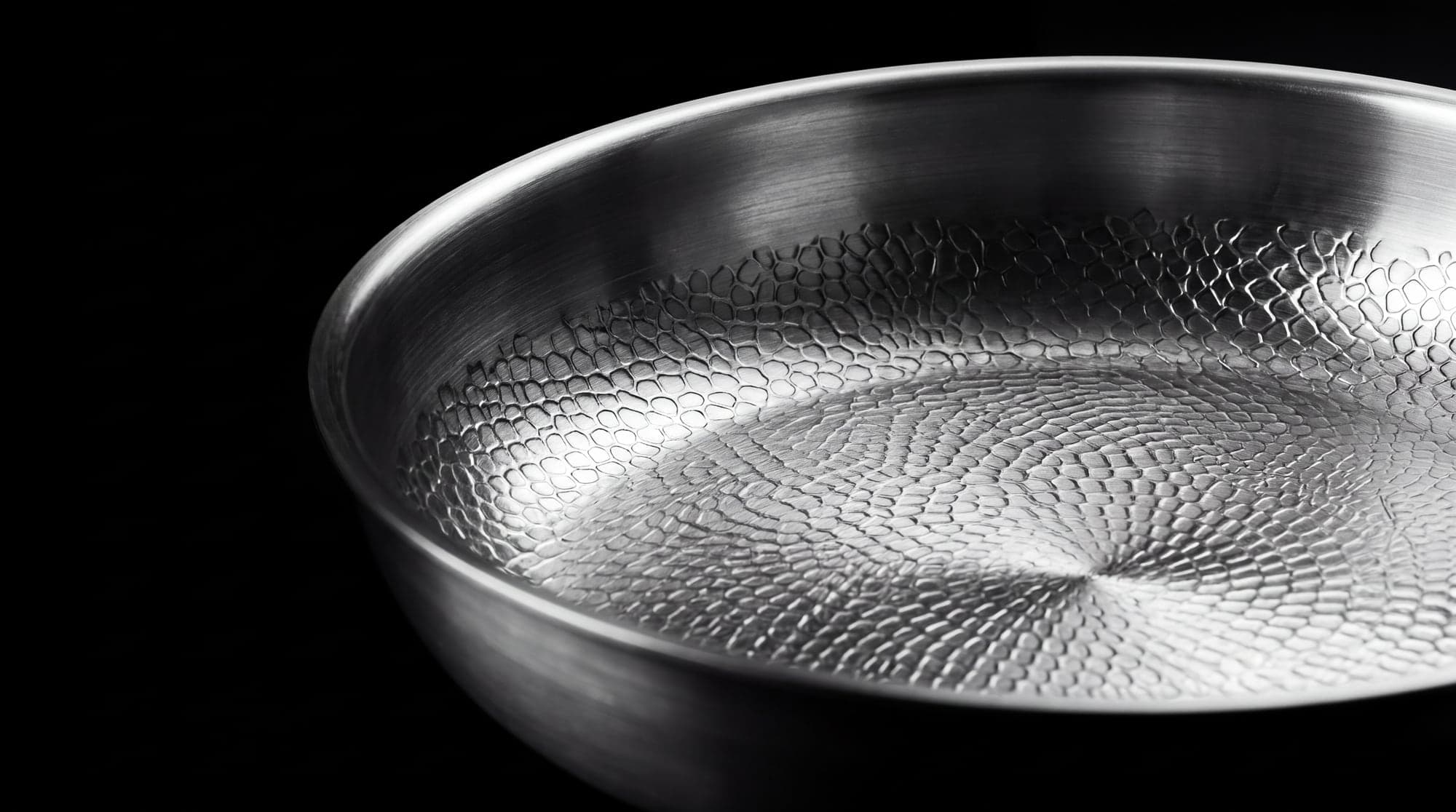
What to observe
Check the rim's finish and the pan's depth: enough to contain oil and juices, shallow enough to flip and toss.
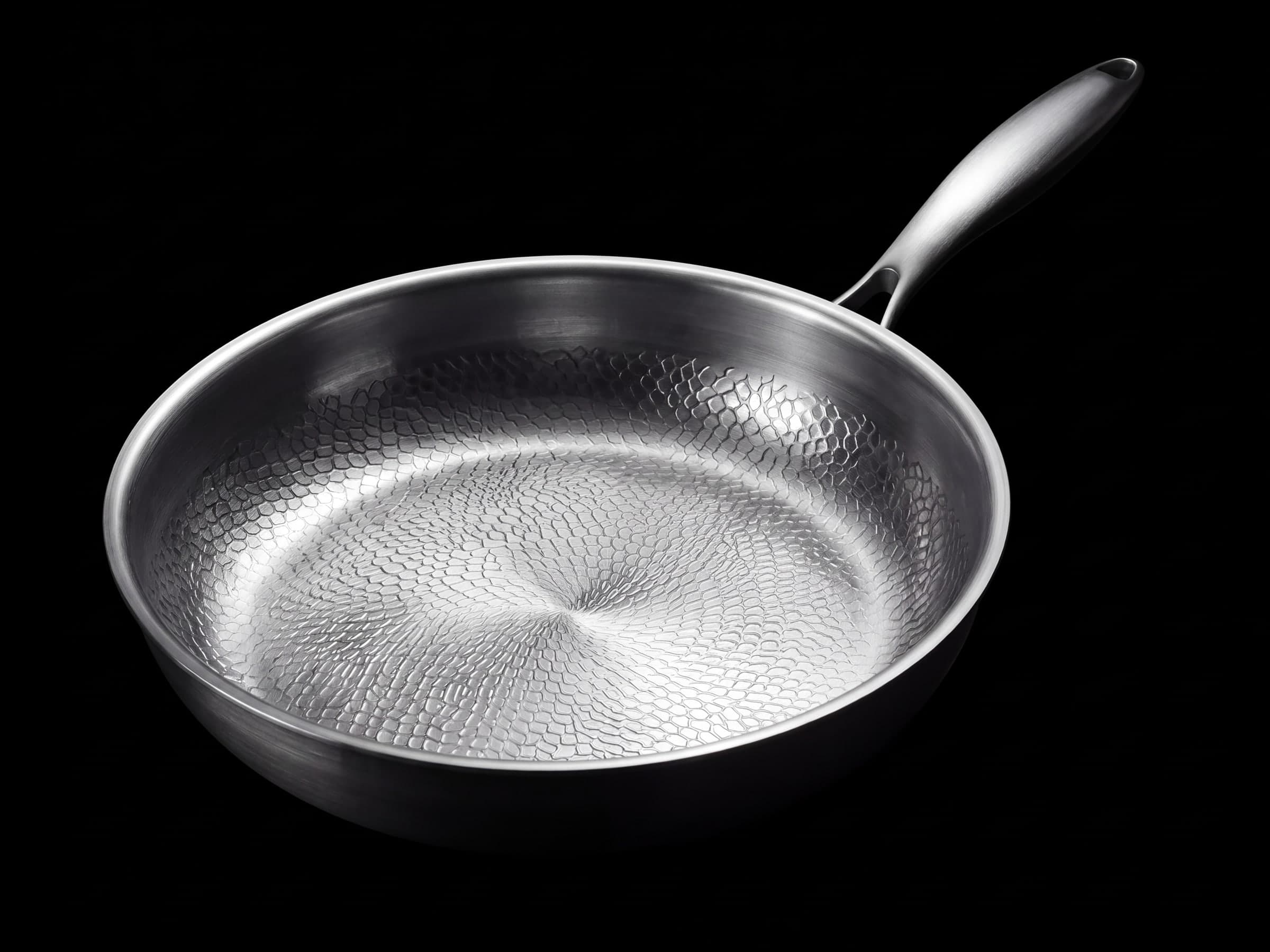
What to observe
Three layers, one finish. A pan meant to look as considered on the stove as on the shelf.
The KAJI promise
Illustration only
“Cook with it for up to 360 days. If you don't love it, send it back for a full refund.”
Reviews
Rated 4 out of 5
“Eggs slide right out once you preheat properly. It took me two tries to get the hang of it, and now it's the pan I reach for every morning.”
Emily Carter · Size: 28 cm
Rated 4 out of 5
“鎚目の仕上げは、実物のほうがさらに美しいです。手に持つと軽いのに、しっかりしていて、まさに本物の道具という感じです。”The hammered finish is even more beautiful in person. Light in the hand but it feels solid, like a real tool.
Haruto Sato · Size: 22 cm
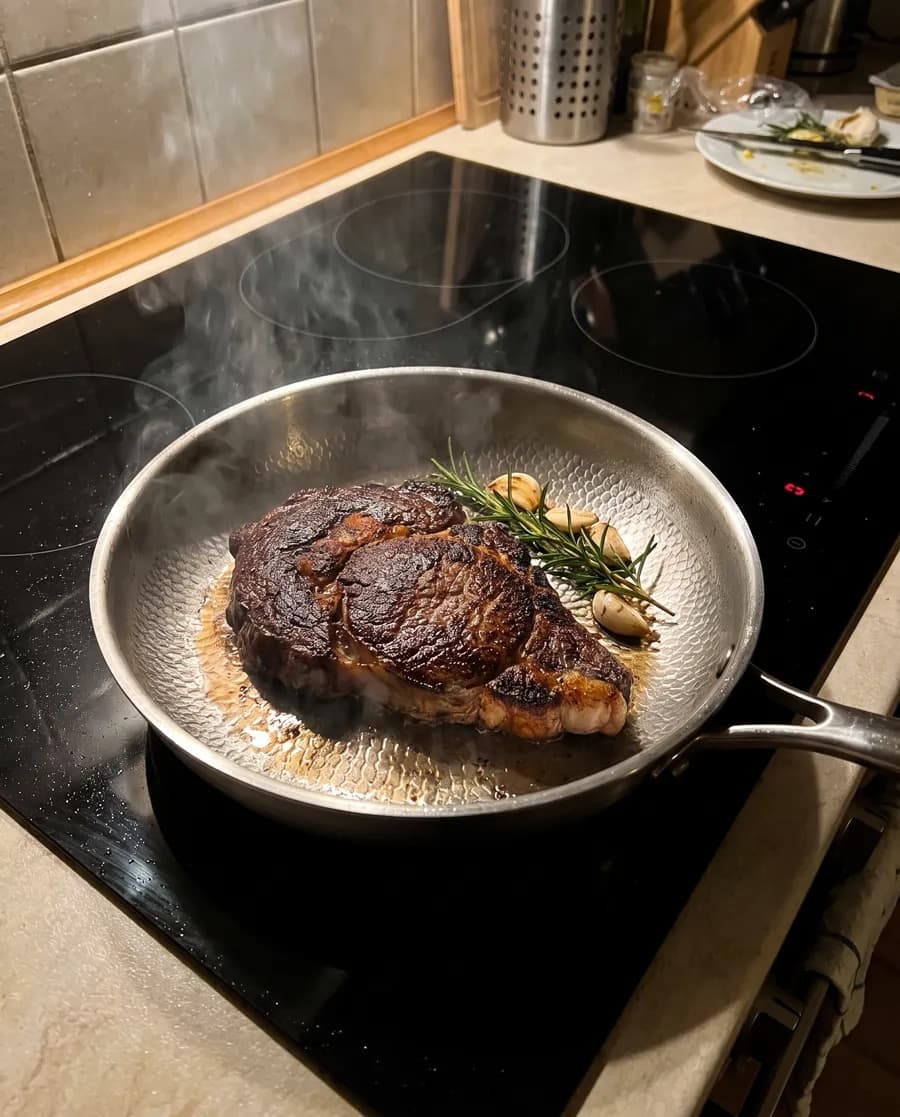
Rated 5 out of 5
“Better crust on a ribeye than my old cast iron, at half the weight. Cleanup was warm water and a sponge.”
Michael Thompson · Size: 30 cm
Rated 5 out of 5
“Finally threw out my peeling non-stick pans. I wash it by hand anyway: it takes thirty seconds.”
Sarah Mitchell · Size: The Trio
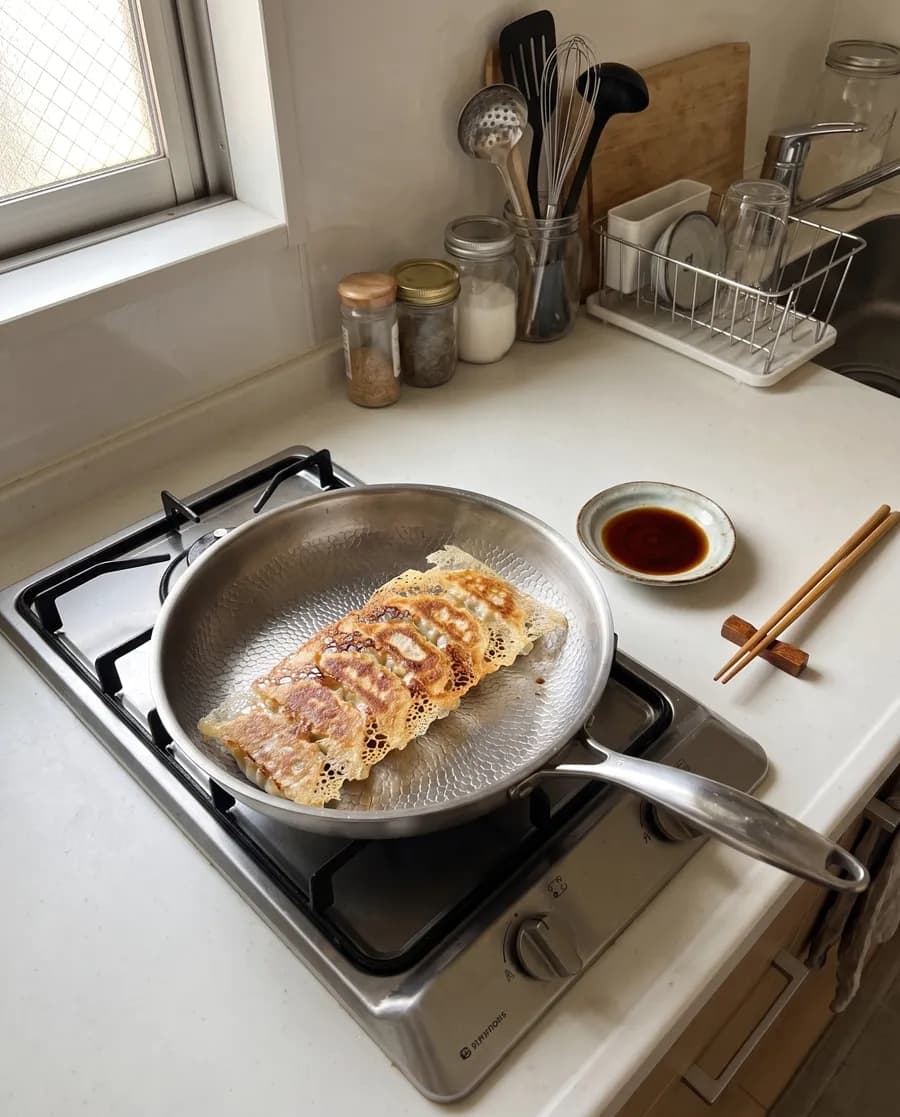
Rated 4 out of 5
“Perfect crispy gyoza. Food sticks a little if you rush the preheat, but that's true of any pan without a coating.”
Yuki Tanaka · Size: 28 cm
Rated 4 out of 5
“Beautiful craftsmanship, and it heats evenly. My only small gripe: the handle gets warm on long cooks.”
Kenji Watanabe · Size: 28 cm
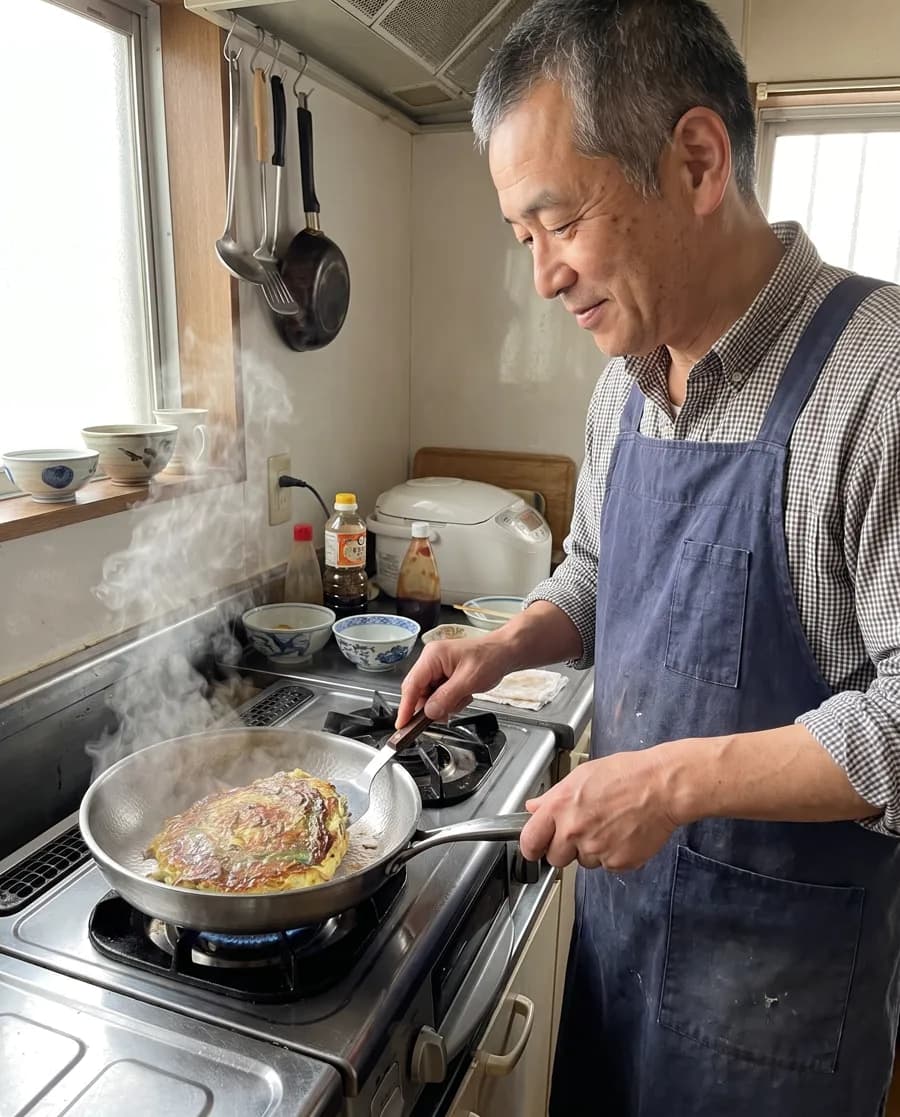
Rated 5 out of 5
“The heat spreads evenly, so my okonomiyaki browns the same from edge to center. You can tell it was made by people who care about tools.”
Takeshi Yamamoto · Size: 28 cm
Rated 5 out of 5
“At my age a heavy skillet is a real problem. This one is light enough to lift with one hand, and the salmon skin came out perfectly crisp.”
Patricia Hughes · Size: 28 cm

Rated 4 out of 5
“Light enough to toss vegetables like a wok. It goes in the dishwasher when I'm busy and comes out fine.”
Keiko Nakamura · Size: 28 cm
Rated 4 out of 5
“First morning I burned the pancakes: my gas stove runs hot. Turned it down to medium and they came out golden and slid right off. Just learn the heat.”
Robert Jenkins · Size: 30 cm
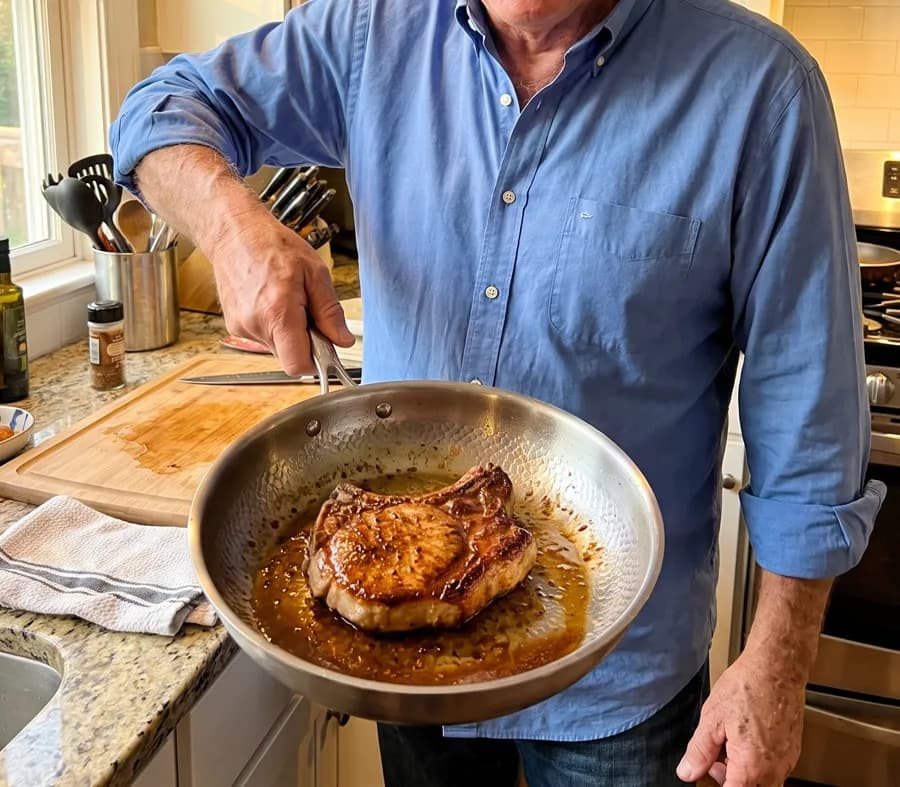
Rated 5 out of 5
“Best pan I've owned for pan sauces. The browned bits lift right off when you deglaze, nothing scorches.”
David Russo · Size: 30 cm
Rated 4 out of 5
“So beautiful I hang it on the wall. A golden tint appeared after a very hot sear, and a little vinegar took most of it away.”
Mariko Fujita · Size: 22 cm
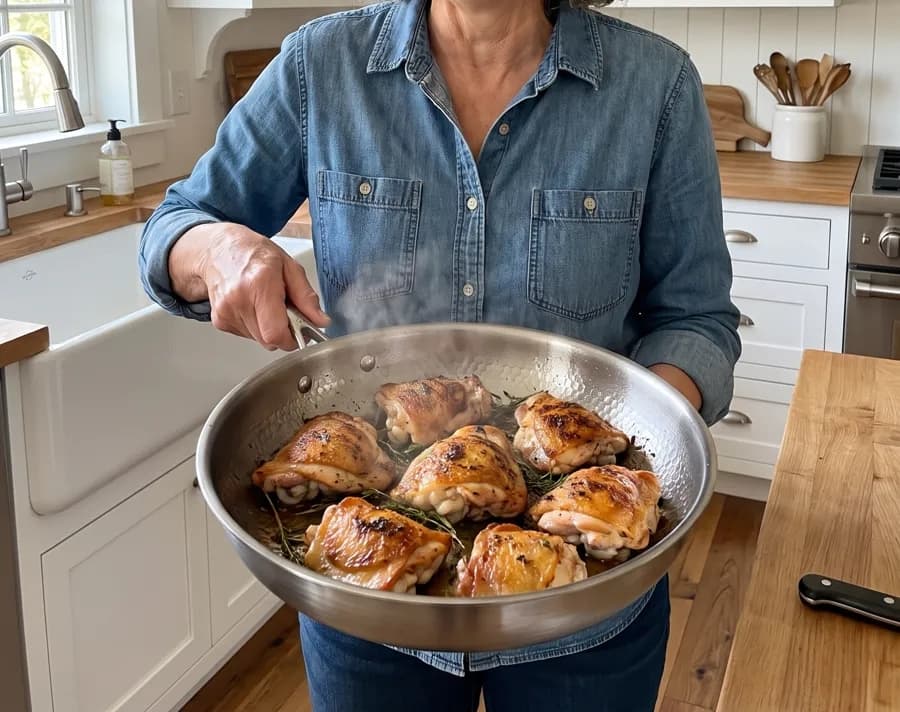
Rated 4 out of 5
“I was skeptical and ordered a single pan to try. Three weeks later I'm ordering the trio. Chicken thighs come out crisp and the pan wipes clean.”
Carol Bennett · Size: 28 cm
Rated 4 out of 5
“I live in a tiny apartment with one burner, so this is the only pan I own now. Rice, vegetables, chicken, all in one, and it still looks beautiful.”
Naomi Ishikawa · Size: 22 cm
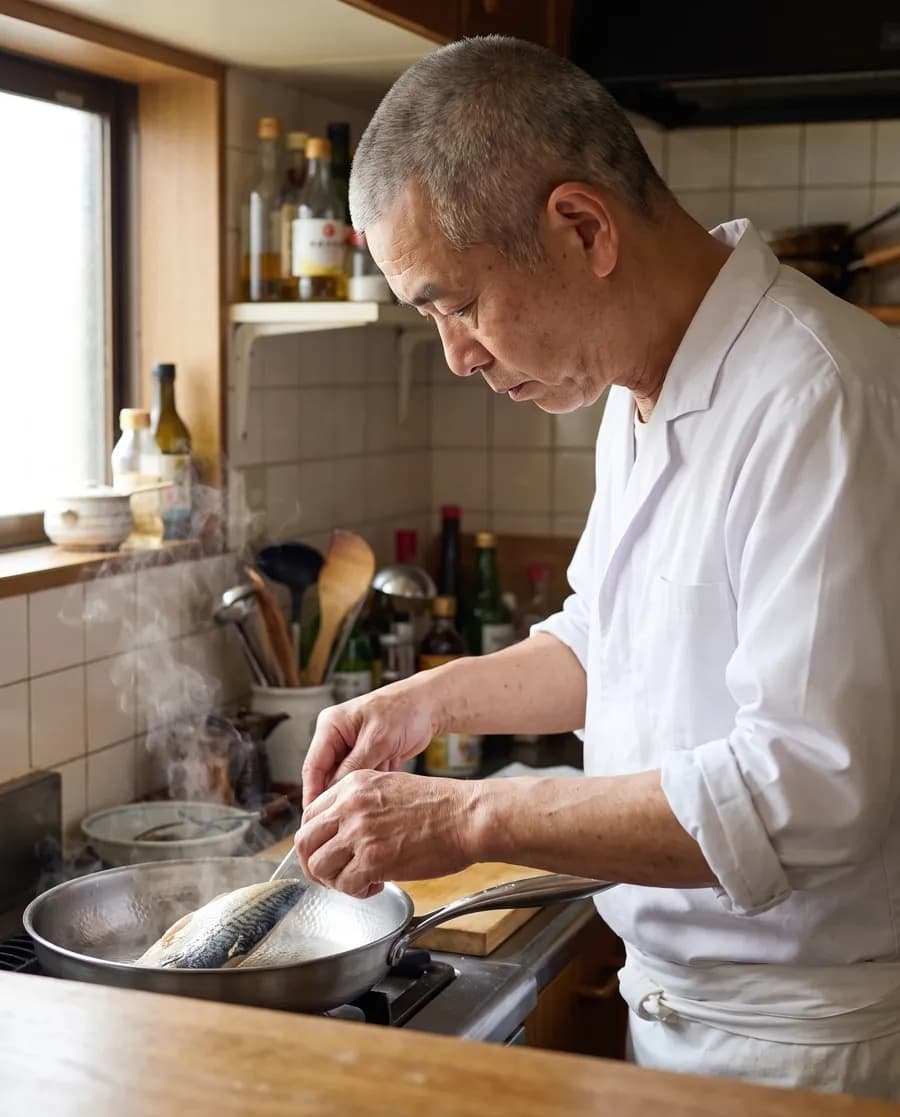
Rated 5 out of 5
“三十年、料理店で働いてきて、ゆっくり火を入れることを学びました。このフライパンは熱をしっかり保ってくれるので、魚の皮が焦らずに均一にパリッと焼けます。”Thirty years cooking in restaurants taught me to cook slowly. This pan holds its heat beautifully: the fish skin crisps evenly without rushing.
Hiroshi Kobayashi · Size: 28 cm
Rated 5 out of 5
“No more flakes of coating in the grandkids' eggs. The frittata slid right out onto the board. Peace of mind, finally.”
Susan Delgado · Size: 28 cm
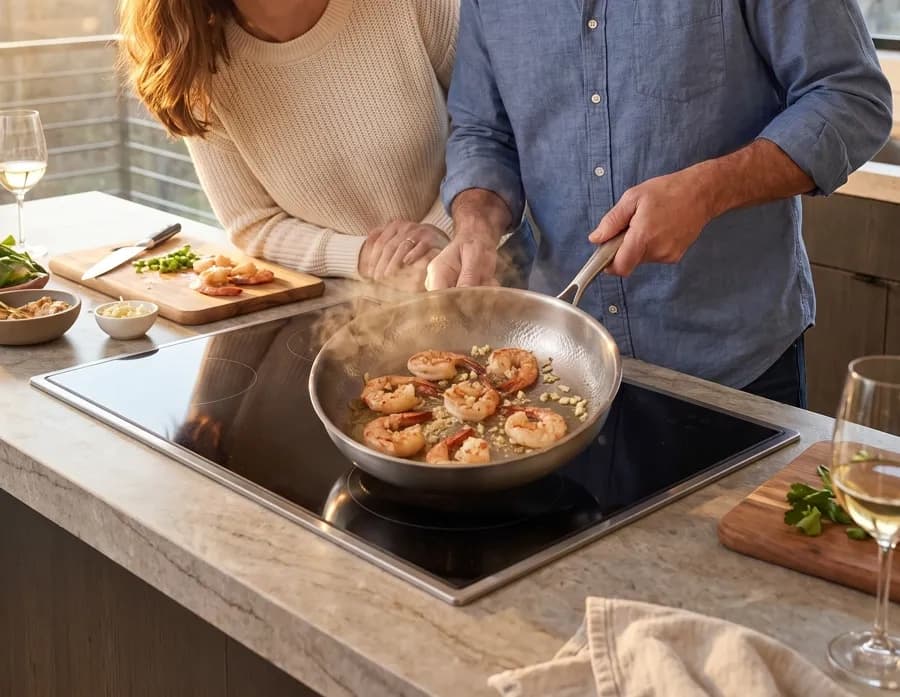
Rated 5 out of 5
“We switched from our hybrid pans because my wife was tired of fighting them. Shrimp, eggs, fish: everything releases once it's preheated. She's happy, so I'm happy.”
Mark Sullivan · Size: 30 cm
Rated 4 out of 5
“After dinner I leave it in warm soapy water for a few minutes and everything wipes away. Cleaning used to be the worst part of cooking.”
Akiko Mori · Size: 22 cm

Rated 4 out of 5
“The handle stays cool on the stovetop, which I didn't expect. Light enough that I can toss peppers with one hand at 68.”
Gary Whitfield · Size: 28 cm
Rated 5 out of 5
“Yakisoba night is easy now. The noodles don't cling, the cabbage chars nicely, and it's light enough to toss.”
Emi Hayashi · Size: 28 cm
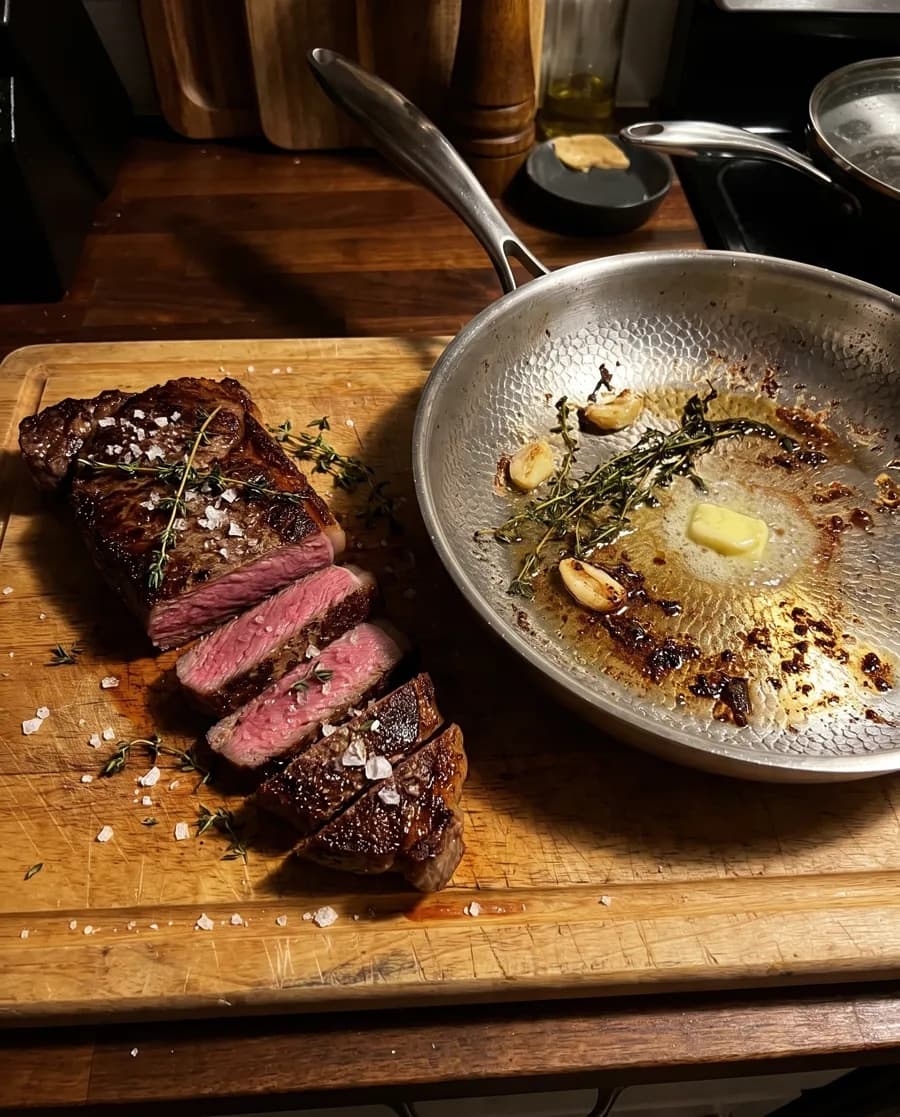
Rated 4 out of 5
“熱をよく保つので、最初のステーキは焼きすぎてしまいました。二回目は一分早く火から下ろしたら、家で焼いた中で最高の焼き色になりました。”It holds so much heat that I overcooked my first steak. Second time I took it off a minute earlier: the best crust I've made at home.
Tom Harrington · Size: 30 cm
Rated 5 out of 5
“It's so pretty I just leave it on the stove. It's the first pan I reach for every day.”
Diane Foster · Size: 28 cm
Why KAJI?
KAJI titanium vs. the non-stick pan you probably cook with today.
| KAJI | Ordinary non-stick pans |
|---|---|
| Surface | |
| KAJI: Titanium wherever it touches your food. | Ordinary non-stick pans: A thin coating sprayed over aluminium. |
| Peeling | |
| KAJI: Nothing can flake off. Not now, not ever. | Ordinary non-stick pans: It flakes off — straight into your eggs. |
| Scratches | |
| KAJI: A scratch is just a scratch. Still titanium. | Ordinary non-stick pans: One scratch and you’re cooking on bare metal. |
| Touching your food | |
| KAJI: Only titanium touches your food. | Ordinary non-stick pans: A synthetic coating that wears thinner every time you cook. |
| Lifespan | |
| KAJI: No coating to wear out. Made to stay in your kitchen. | Ordinary non-stick pans: Starts sticking, then ends up in the bin. |
No coating means a little technique: preheat, add fat, let food release. Cooking guide
Our story
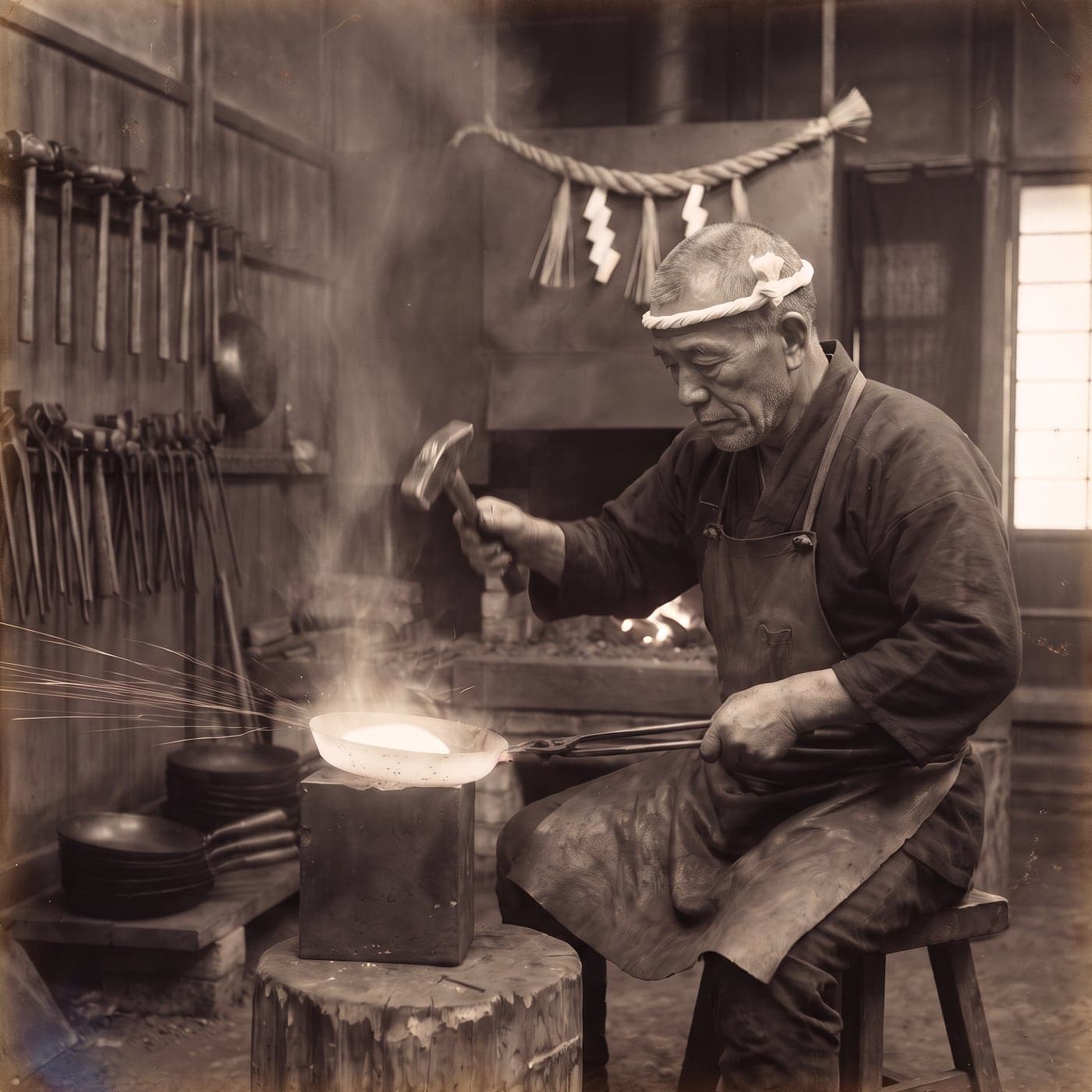
KAJI began with my grandfather, a Japanese blacksmith who spent his life shaping metal with fire and hammer.
Everything he knew went into one pan: bare titanium with nothing applied on top, and a hammered finish that belongs to the metal itself.
Today, every Kajipan is held to the standard he set through years of hard work at the anvil: honest material, and no shortcuts.
A blacksmith's knowledge, handed down.
A lifetime of long days at the forge.
Bare titanium, with no added coating.
No shortcuts between fire and hammer.
Before you buy
What matters before you invest in a pan.
FAQ
If you like cooking directly on metal, enjoy a little technique and want a pan without a coating, yes. If you want food to slide around with no fat and no preheating, a coated non-stick pan will suit you better.
No, it's ready to cook straight out of the box. A thin film of oil heated once in the pan can help food release during the first uses.
Yes, it's dishwasher-safe. Washing by hand keeps the hammered finish at its best: let it cool, then warm water, a soft sponge, and dry fully.
Yes. Metal spatulas and whisks are fine: there is no coating to scratch off.
Yes, it's oven-safe up to 260 °C (500 °F).
Designed by KAJI and made in China by a specialist cookware manufacturer. It is lab-tested by Eurofins for food contact: no lead or cadmium was detected.
Email us within 7 days of delivery with your order number. Keep the packaging and send clear photos of both the pan and the packaging. We send a replacement or refund you in full, and give you a prepaid label for the damaged pan.
Email us with your order number. We reply with the return address, plus a free prepaid label within 30 days of delivery (after that, return shipping is on you). Once the pan arrives, we inspect it and refund you within 14 business days, to your original payment method.
High heat can leave golden or blue tints on titanium. It's harmless and doesn't affect cooking. A little white vinegar on a soft sponge usually brings back the original shine.