
How to cook eggs in a titanium pan without sticking
By KAJI · November 7, 2026
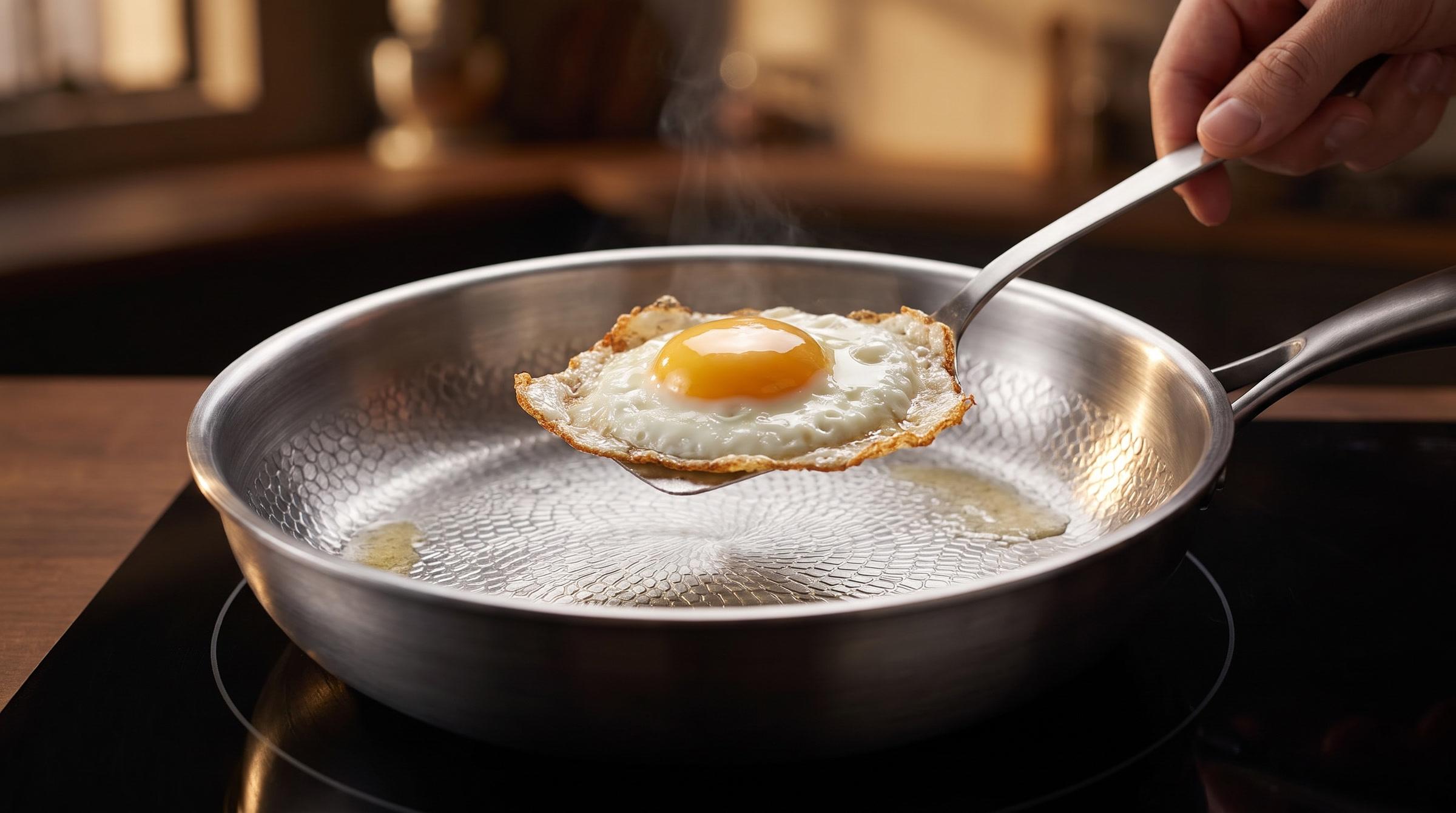
Why eggs stick to a pan without a coating
Eggs are mostly protein and water. When raw egg touches a metal surface that is not hot enough, the proteins bond to the metal before they have time to set. On a coated nonstick pan the coating hides this; on titanium, stainless steel or cast iron, heat does the job instead.
The good news: once the pan is properly preheated, a thin layer of steam forms under the egg and the white sets before it can grip. That is the whole trick, and it takes one minute.
The fried egg, step by step
- Preheat the empty panMedium-low to medium heat, one to two minutes. Avoid high heat on an empty pan.
- Check the heatFlick in a few drops of water: if they sizzle and dance across the surface, the pan is ready. If they sit and boil, wait a little longer.
- Add a little fatA small knob of butter or a teaspoon of oil, swirled over the surface. Optional, but it makes the release easier and the egg tastier.
- Crack the egg in and lower the heatMedium-low is plenty for eggs. Too hot and the white browns and grips before it sets.
- Leave it aloneDon't touch it for the first minute or two. The egg sticks at first, then lets go on its own as the white sets.
- Slide a thin spatula under itA metal spatula is fine on titanium. If it resists, give it another 20 to 30 seconds.
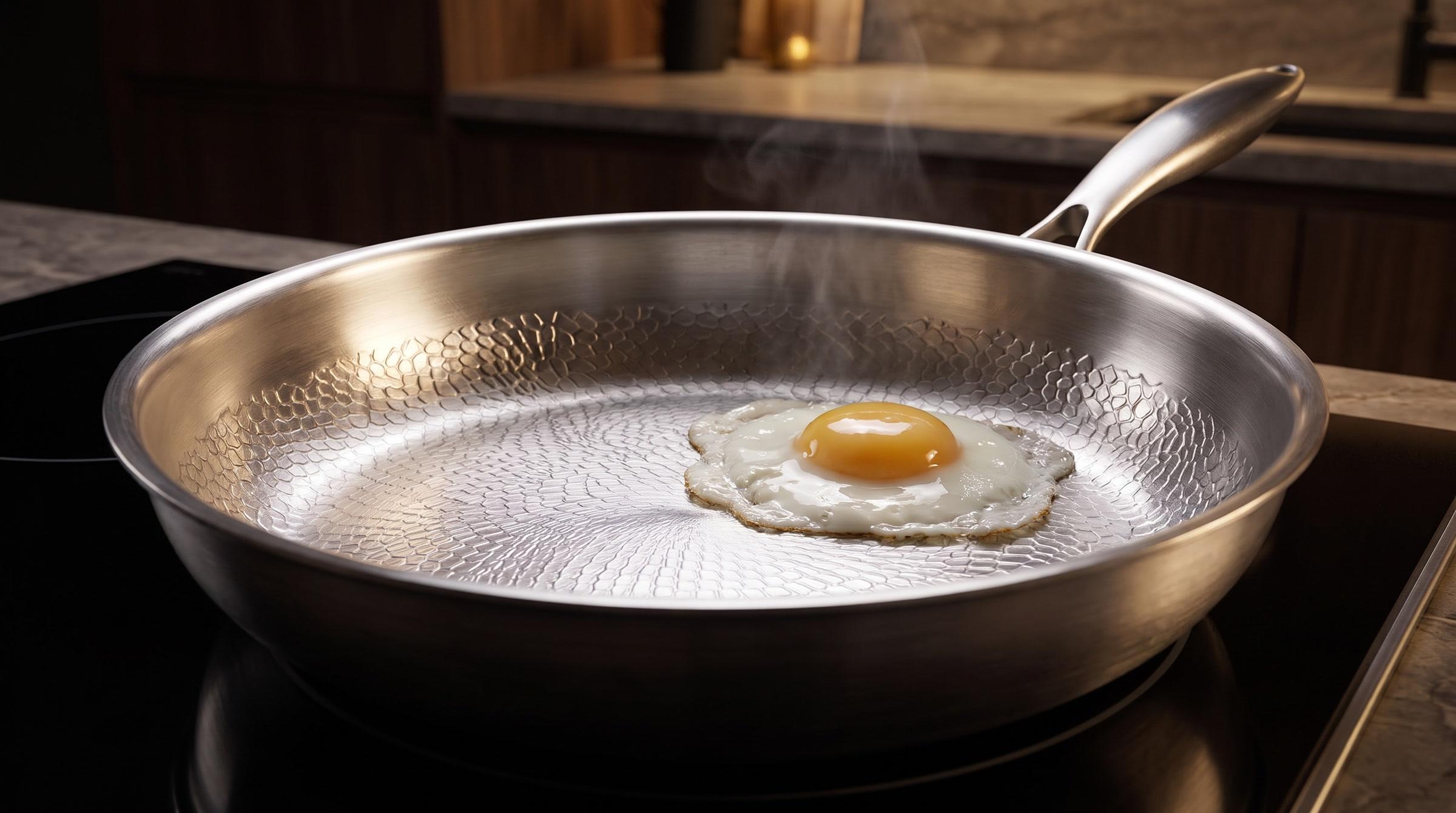
Can you cook an egg without oil?
Yes. In a well-preheated titanium pan, an egg sets and releases even without butter or oil. It simply asks for a little more care with the heat and the timing. A small amount of fat still makes it easier, gives a better taste and crispier edges, so it is what we recommend for everyday cooking.
Scrambled eggs
- Preheat for a minute on medium-low, then add butter and let it foam.
- Pour in the beaten eggs and wait 10 to 15 seconds before stirring.
- Stir slowly with a spatula, pushing the set egg to the centre.
- Take the pan off the heat while the eggs still look a little wet: they finish cooking on their own.
Omelette
- Preheat, then add a little more butter than for a fried egg and coat the walls too.
- Pour in the eggs, let the base set for a few seconds, then lift the edges and tilt the pan so raw egg runs underneath.
- When the top is barely set, fold and slide it onto the plate.
- Two or three eggs: 22 cm pan. Four or more: 28 cm.
Still sticking? Check these
The pan was not hot enough
The most common cause. Give it the full one to two minutes and use the water drop test.
The pan was too hot
If the white bubbles, browns and grips instantly, the heat is too high. Lower it to medium-low before the egg goes in.
You moved it too early
An egg sticks for the first minute, then releases. Wait until the edges look set and slightly lift.
The surface was not clean
A film left from the last meal makes eggs grip. A quick wash with warm water and a soft sponge solves it. See our cleaning and care guide.
If an egg does stick
No harm done. Let the pan cool a little, add warm water and leave it for a few minutes: the egg lifts off with a soft sponge. You can also use a metal spatula, since there is no coating to scratch, and the pan is dishwasher-safe.
Quick questions
What heat should I cook eggs on?
Preheat on medium, then cook on medium-low. Eggs never need high heat.
Is titanium better than nonstick for eggs?
A new nonstick pan is the easiest for eggs, but its coating wears out. Titanium asks for a preheat and lasts. Read titanium vs nonstick: the real difference.
Which pan size is best for eggs?
The 22 cm (8.5 in) for one to three eggs, the 28 cm (11 in) for more. See which size you need.